Why does a pothole filled in winter open up again so soon? Why the patching material comes away
Potholes in winter and the snowmelt season are mostly filled in a hurry with cold mix, a patching material used as a temporary fix, and it comes away easily in water and cold, so a hole can open again in the same place. Why it comes away, and who to tell when it does.
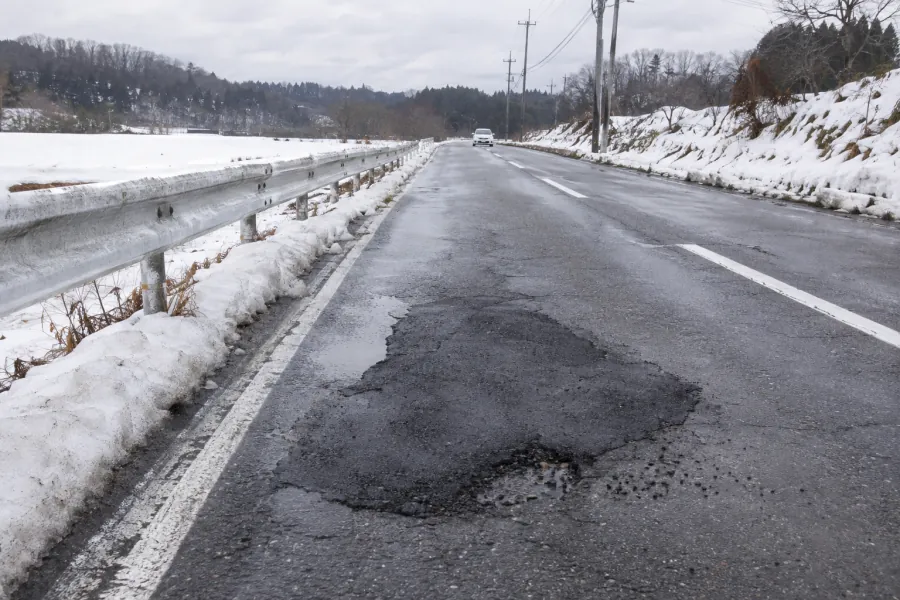
Most potholes you see filled in winter and the snowmelt season are temporary repairs, made in a hurry with a patching material called cold mix. When the road surface is wet or cold, cold mix gets driven over before it has properly set, and it comes away easily. If a hole has opened again where it was filled, tell the road's manager again.
Why are winter pothole repairs only temporary?
Because a hole left open damages the vehicles that drive over it. A Hokkaido Regional Development Bureau document says pothole repairs are urgent for the safety of passing vehicles and are done with cold mix (source: Hokkaido Regional Development Bureau, Otaru road office maintenance council).
Roads are normally surfaced with asphalt mix heated at a plant (hot mix asphalt). In cold regions, though, asphalt plants are often not running in the snowmelt season, so hot mix is not readily available (source: Civil Engineering Research Institute for Cold Region).
NEXCO Central Japan also treats filling a hole with bagged cold mix as a stopgap until a full repair is made (source: NEXCO Central Japan).
What is cold mix?
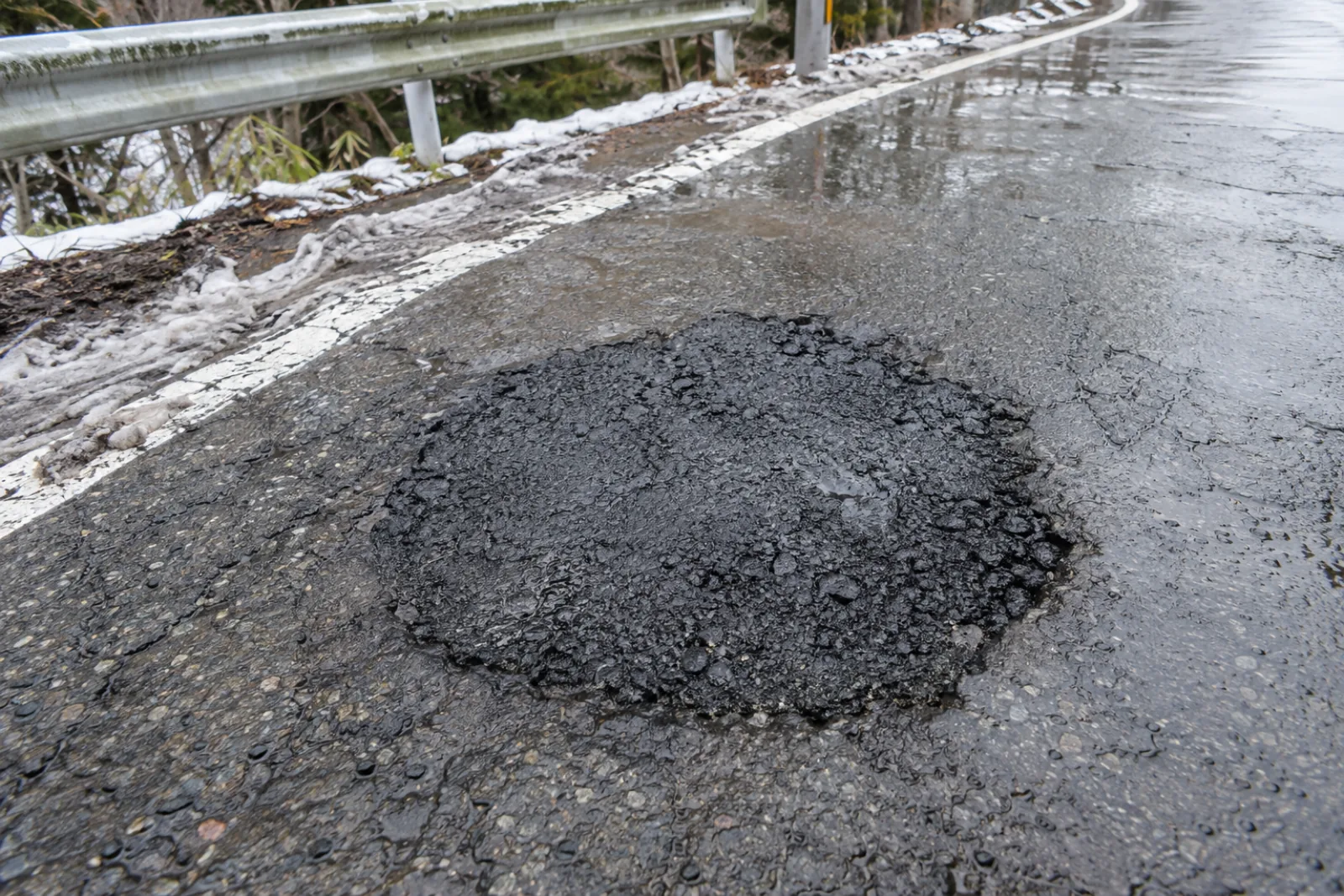
Cold mix is an asphalt patching material used as it is, without heating. It can be taken out of the bag, packed into a hole and tamped down, so road patrols can fill holes on the spot.
There are standard types that have been around for years and "all-weather" types that can be laid in the rain and tend to last longer; performance varies a lot between products (source: Civil Engineering Research Institute for Cold Region).
Why does rain or meltwater make it come away?
Because on winter roads it is hard to meet the conditions the material needs to reach its full strength. A study of repair records on national roads in snowy, cold regions reports that where water sits on the surface, those conditions are hard to meet, and the patch often comes away soon after (source: JSCE Journal of Construction Management).
Water also gets in the way of the glue between the patch and the old pavement. NEXCO Central Japan's small-bag patches need an adhesive called emulsion sprayed first, and the trouble was that in the rain the emulsion washes away and the hole cannot be repaired (source: NEXCO Central Japan).
The pavement around the hole is weak too. Snowmelt-season potholes form when water that has got into cracks freezes and thaws again and again, making the surrounding pavement brittle (source: Civil Engineering Research Institute for Cold Region). Even if the patch holds, the edges crumble. How potholes form is covered in Why do potholes form?
Why does a hole keep opening in the same place?
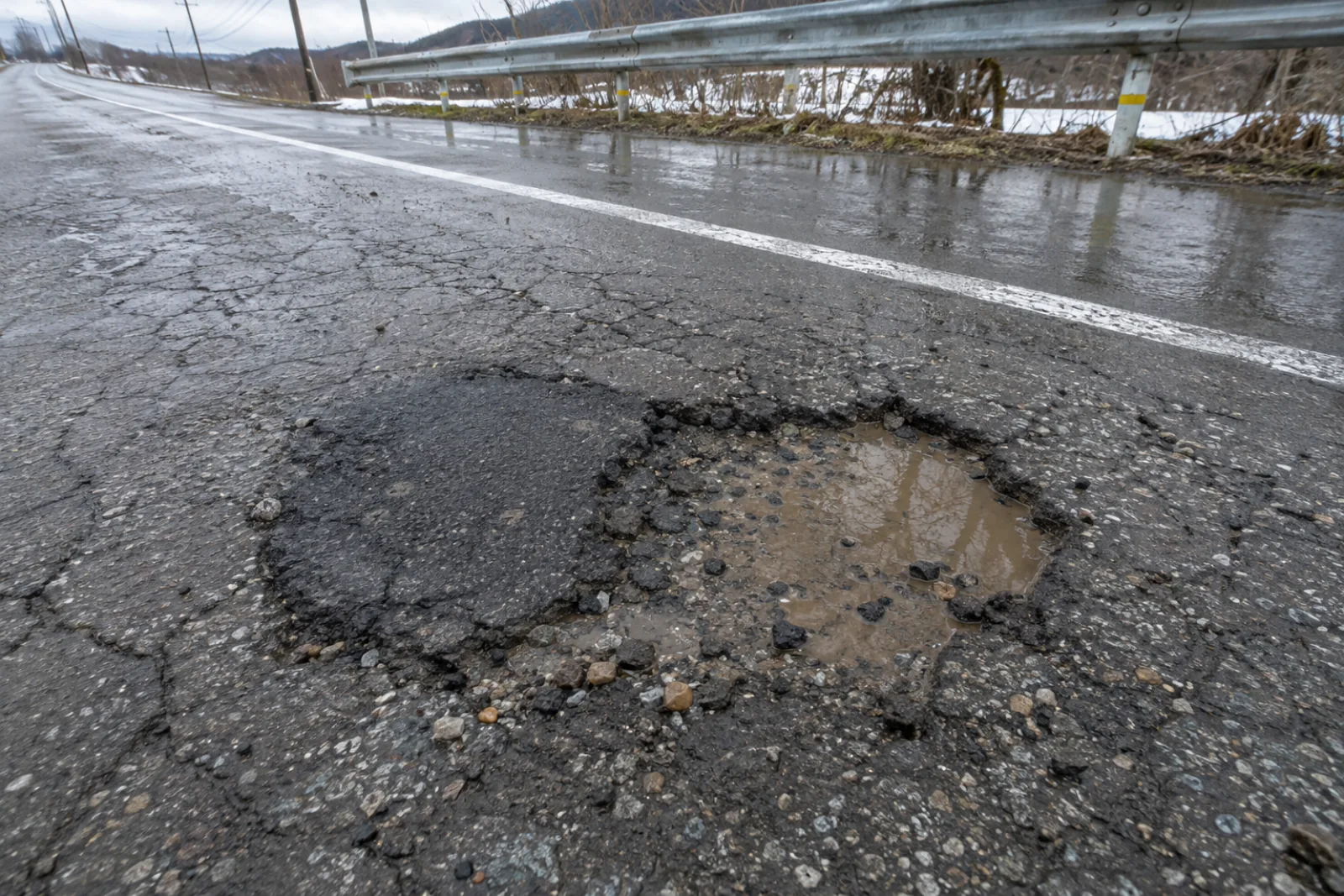
Because a temporary repair only plugs the hole itself and does not fix the brittle pavement around it. The Hokkaido Regional Development Bureau council document lists, as problems with cold mix, damage recurring where repairs were made and having to work in bad weather while traffic keeps moving (source: Hokkaido Regional Development Bureau, Otaru road office maintenance council).
The Civil Engineering Research Institute for Cold Region says removing water and brittle material from the hole before packing it helps the repair last. On winter roads, where holes are filled in a hurry with traffic passing, that is not always possible.
Is there a repair that lasts longer?
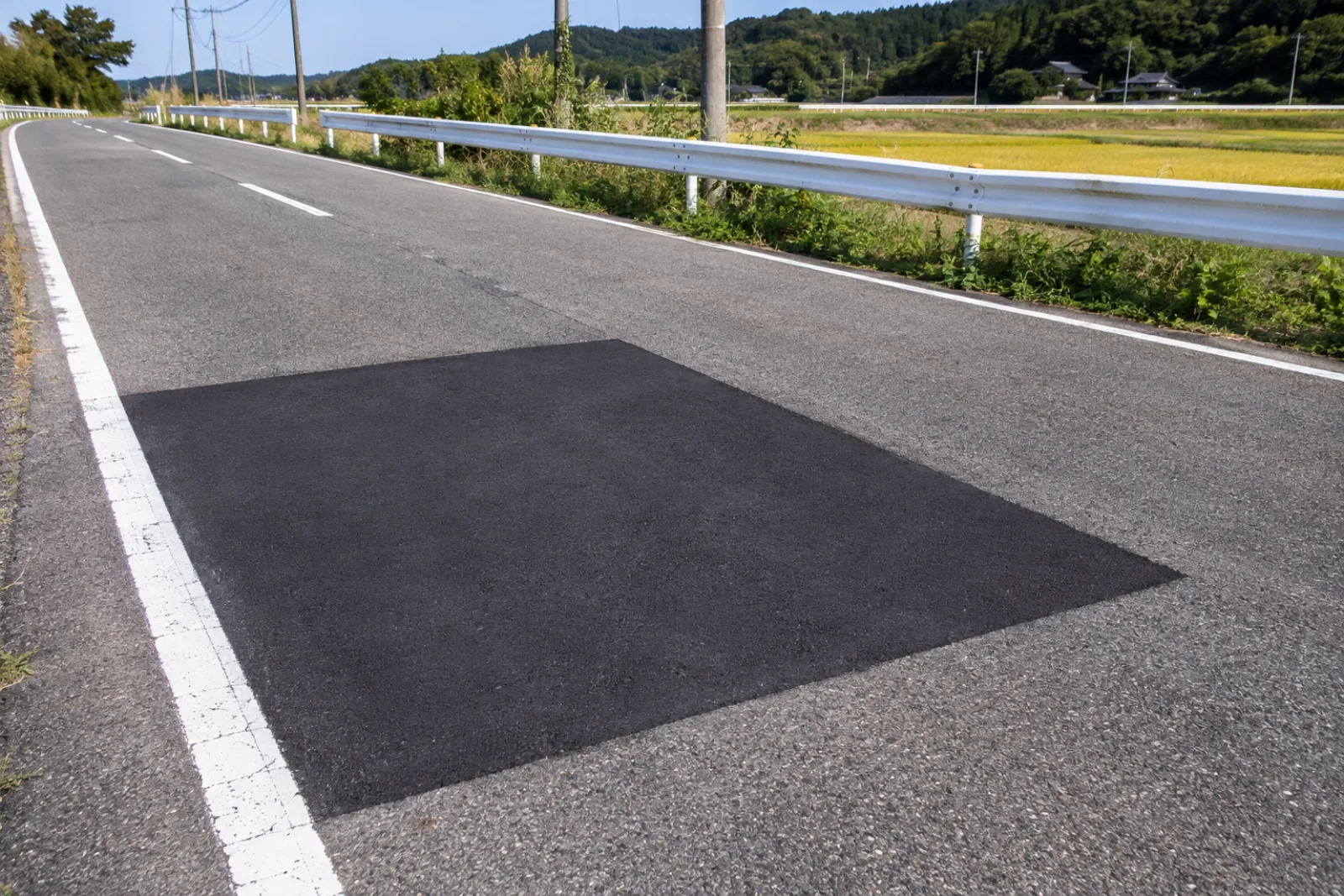
Yes. The institute recommends choosing the material to suit whether the surface is dry or wet and the air temperature, and using hot mix asphalt where possible (source: Civil Engineering Research Institute for Cold Region).
The materials are changing too. According to the Hokkaido Regional Development Bureau council document, older cold mix did not last, but products that claim higher durability or all-weather use are now on the market, and trials have compared which ones last longest under the same conditions.
Who do you tell if the hole has opened again?
Tell the road's manager: the city office for a city road, the prefecture's public works office for a prefectural road, or the national road office for a national road managed by the state. If you don't know who manages it, you can report it on the Road Emergency Dial (#9910) (source: Ministry of Land, Infrastructure, Transport and Tourism).
It is fine to report a place again even if you have reported it before. If you find a hole while driving, slow down to pass it, and leave the filling to the road's manager rather than doing it yourself.
For road users: read next Who to contact when you find a hole in the road / If you hit a pothole and get a flat tyre
For road managers Infra Intelligence offers MICHIKARTE, a service that lets people record damage they find on the roads they use every day with a smartphone and passes it on to the local governments and others who manage those roads.
Last checked: November 25, 2026
References (in Japanese)
- Kimio Maruyama, Ryuji Abe, Takashi Kimura (Civil Engineering Research Institute for Cold Region, PWRI), "Pavement damage in the snowmelt season and how it occurs"
- Hokkaido Regional Development Bureau, Otaru road office maintenance council, "Trial paving with cold mix, FY2016"
- Eigo Fujiwara et al., "Durability analysis of pothole patching mixture in snowy cold regions", JSCE Journal of Construction Management, Vol. 15 (2008)
- NEXCO Central Japan, "Development of the TOKE Pack pothole patching material"
- Ministry of Land, Infrastructure, Transport and Tourism, "Road Emergency Dial (#9910)"