You hit a pothole while driving. What do you do first? Why to check the side of the tyre even if it looks fine
If you hit a pothole, stop somewhere safe and check the side of the tyre for bulges or cuts. If your car is damaged, call 110; to simply report the hole, contact the road manager or #9910. Where to stop, how to check tyres and wheels, and who to ask about repair costs.
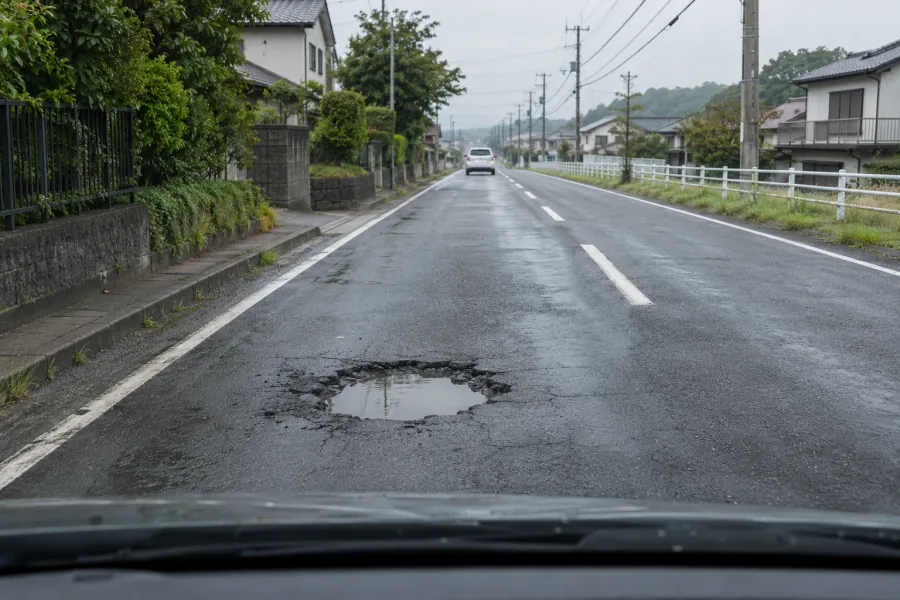
If you hit a pothole hard enough to feel a thud, turn on your hazard lights, stop somewhere safe and check the side of the tyre for bulges or cuts. Even if the tyre hasn't lost air, the cords inside the sidewall may have snapped and left a bulge. If your car is damaged or someone is hurt, call 110 (police). If you only want to report the hole, contact the road manager or the road emergency line (#9910).
Where should you stop?
On ordinary roads, turn on your hazard lights, slow down and move to a spot where you won't block traffic behind you. If you have a flat, don't drive far. JAF advises stopping somewhere safe as soon as you notice a flat. A flat front tyre pulls the steering and makes it hard to drive straight (source: JAF Mate Online).
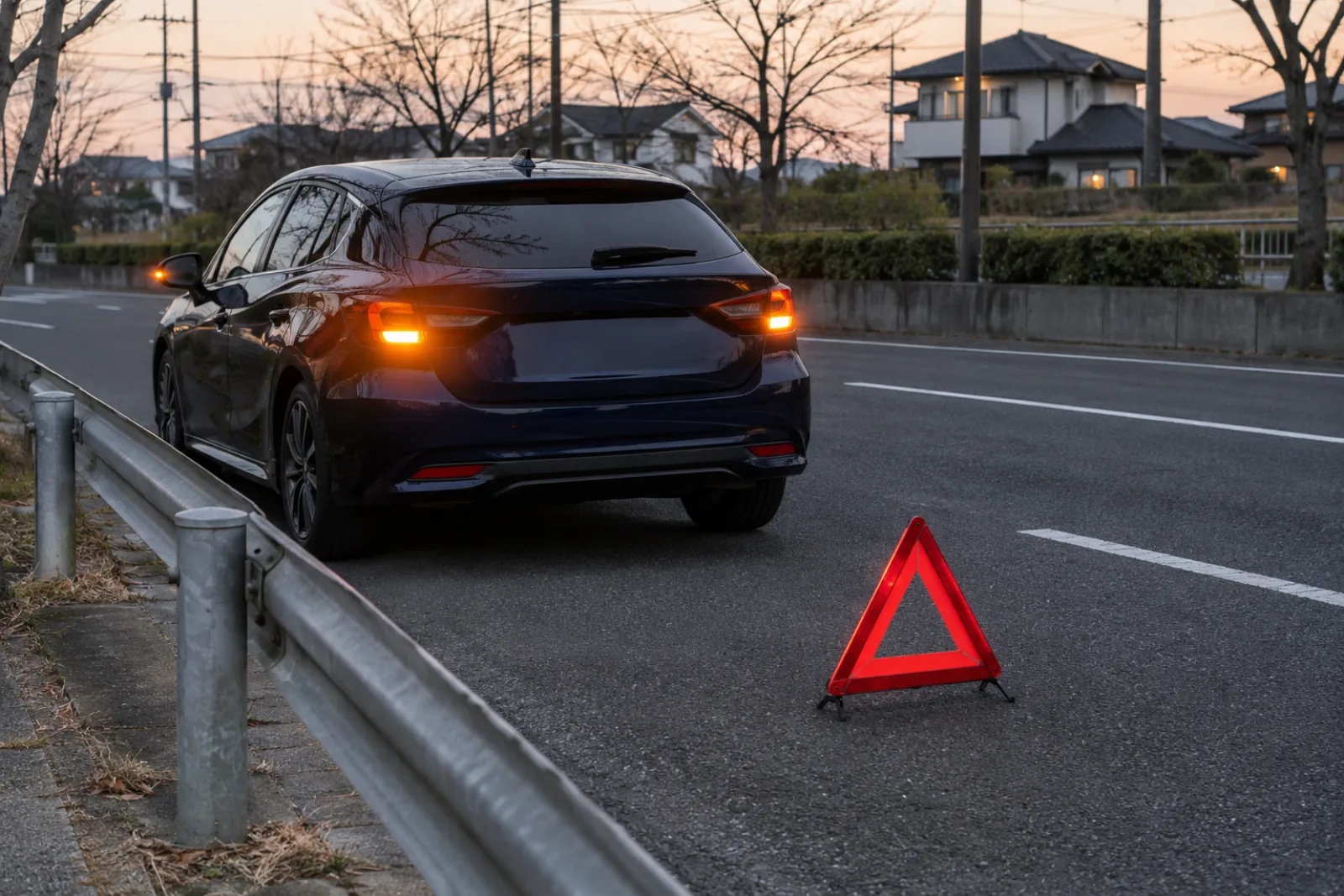
On expressways there are rules for stopping. If you break down and stop on the main lanes or the shoulder, you must warn drivers behind you that your car has stopped (Road Traffic Act, Article 75-11). NEXCO Central's guidance gives this order (source: NEXCO Central: "If an accident or breakdown happens").
- Turn on your hazard lights, light a flare and set up a warning triangle behind the car
- Get the driver and all passengers to a safe place outside the guardrail
- Once you're safe, call 110, use an emergency roadside phone or call #9910
On an expressway, staying in the car is not safe. Changing a tyre on the shoulder is dangerous too, so call a roadside assistance service.
What should you check on the tyres and wheels?
Once you've stopped, look at the tyre on the side that hit the hole. Japan's daily vehicle inspection rules also list tyre air pressure, cracks and damage, abnormal wear and tread depth (source: Automobile Inspection Standards). After hitting a pothole, check these four things.
| Where to look | What to watch for |
|---|---|
| Side of the tyre | A bulge, or a deep cut |
| Shape of the tyre | Flatter at the bottom than the other tyres (losing air) |
| Rim of the wheel | Bent, dented or badly scraped |
| How the car drove before you stopped | Steering pulled, or the car shook |
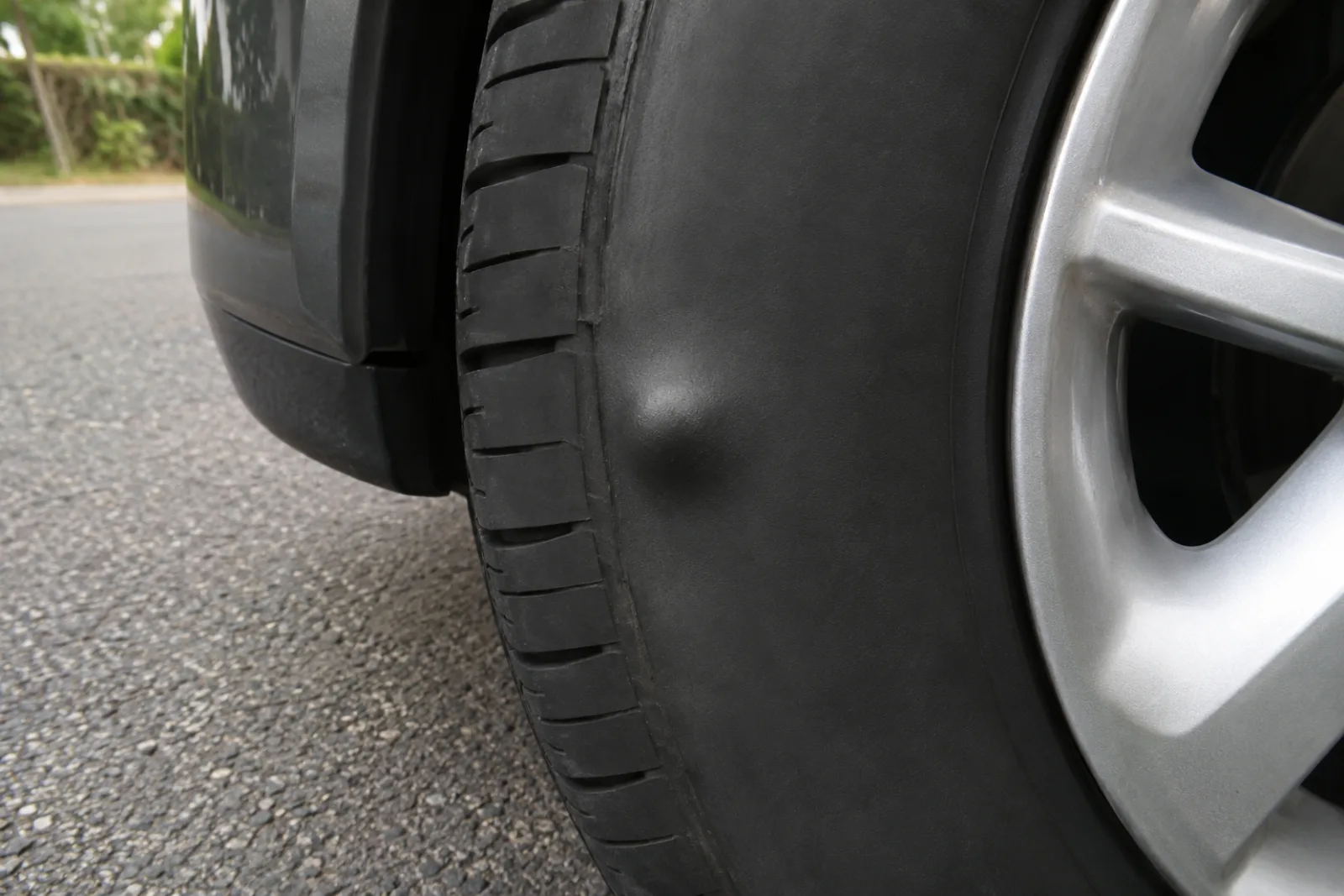
If the side of a tyre has a bulge, don't drive on it. However small it looks, it means cords inside have snapped. If the tyre is losing air or you can't tell, call roadside assistance there and then, or have it checked at a nearby tyre shop or garage.
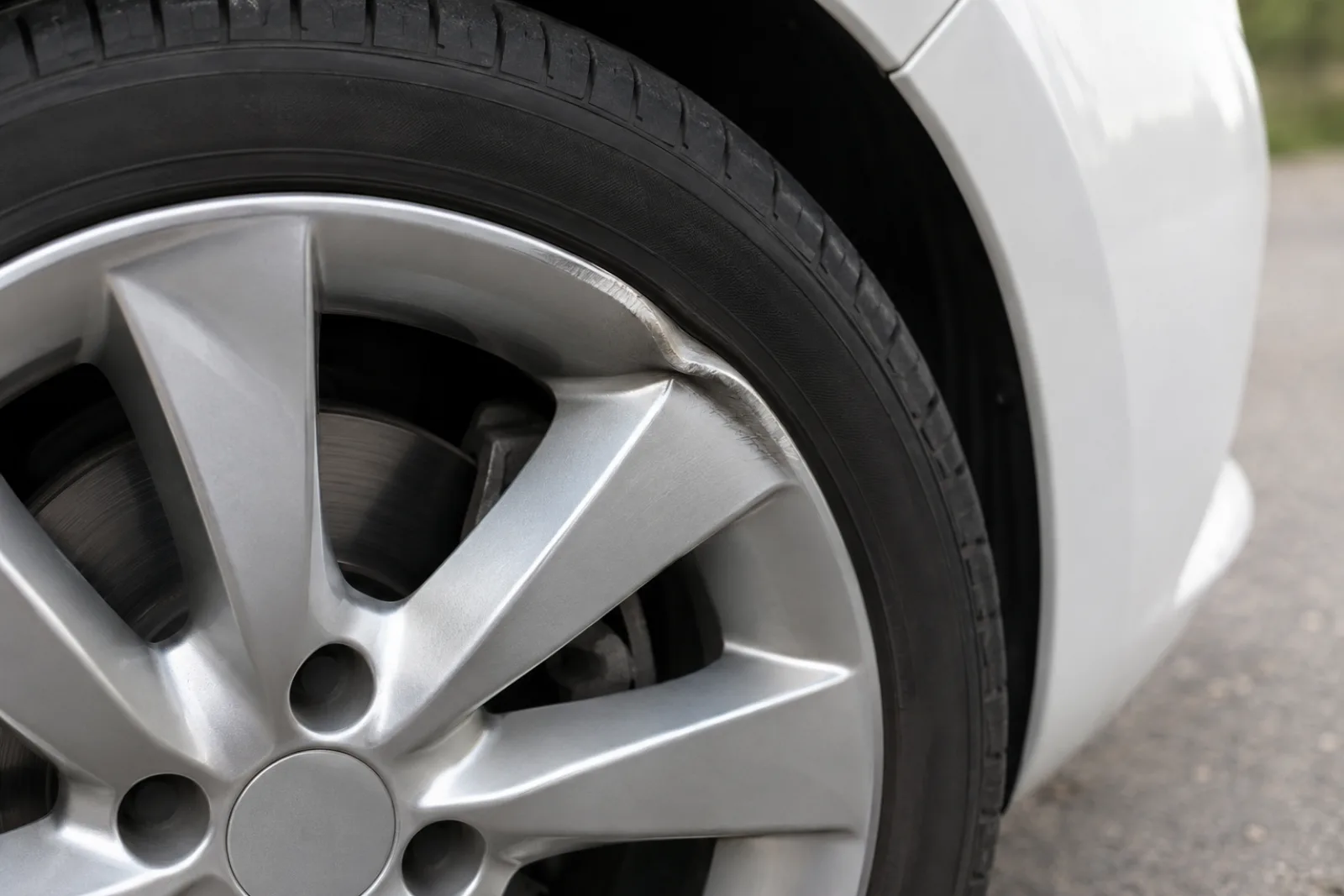
If the rim of the wheel is bent or chipped, have it checked along with the tyre.
Why check the sidewall even if the tyre looks fine?
Inside a tyre are layers of cords that hold its shape. According to the Japan Automobile Tyre Manufacturers Association (JATMA), when a tyre goes over a step such as a kerb, the sidewall can get pinched between the step and the wheel rim, and these cords can snap. Where they snap, the air pressure inside can push the sidewall out into a bulge (source: JATMA: Tyre Safety News No. 66).
To a tyre, the edge of a pothole is a step too. JATMA asks drivers to always check the sidewall for anything unusual after going over an obstacle with a hard jolt.
Even if everything seems fine that day, it's worth looking at the tyre again the next morning. If it has lost air, the damage may be from the pothole.
What happens if you keep driving on a flat?
If you keep driving on a flat, the inside of the tyre gets pinched between the wheel and the road and damaged, and an emergency repair may no longer be possible (JAF Mate Online). A tyre that could have been patched may end up needing to be replaced.
Some recent cars carry a puncture repair kit instead of a spare tyre. But depending on the size and position of the damage, the kit can't fix it (source: JATMA: Tyre Safety News No. 69). Check your owner's manual to see what your car carries.
Who should you call?
Who to contact depends on whether the car was damaged or anyone was hurt.
| Situation | Contact |
|---|---|
| The car is damaged or someone is hurt | 110 (and 119 if anyone is injured) |
| The car is fine and you want to report the hole | The road manager, or the road emergency line (#9910) |
| The car can't be driven | Your car insurance's roadside assistance, JAF, etc. |
#9910 is run by the Ministry of Land, Infrastructure, Transport and Tourism (MLIT). It takes reports of potholes, fallen objects and the like 24 hours a day, free of charge, and you can also report through LINE. For accidents, it asks you to contact the police on 110 (source: MLIT: Road emergency line (#9910)).
The road manager depends on the type of road: the city office for city roads, the national highway office for national roads, and so on. For how to tell which is which, see Who do you contact when you find a hole in the road?.
Will the cost of repairing the tyre be covered?
If the road was not properly managed, the road manager may pay for repairs. But whether they pay, and how much, is decided by the road manager case by case, so start by asking the manager of that road.
If you plan to ask, report it to the police on 110 on the spot. Accidents that were not reported to the police can't get a traffic accident certificate (source: Japan Safe Driving Center). Take photos of the hole and the car, and keep the damaged tyre or wheel. For which photos to take and how the process works, see A pothole gave me a flat tyre. Will I be compensated?.
Read next A pothole gave me a flat tyre. Will I be compensated? / Reporting a pothole: LINE, an app or a phone call?
For road managers I run MICHIKARTE, a service that lets road users record damage they find with a smartphone and passes it on to road managers.
Last checked: 18 November 2026
References (in Japanese)
- MLIT: Road emergency line (#9910)
- e-Gov: Road Traffic Act
- e-Gov: Automobile Inspection Standards
- NEXCO Central: "If an accident or breakdown happens"
- JAF Mate Online: "A rattle while driving is a warning sign: a rear tyre punctured by debris"
- JATMA: Tyre Safety News No. 66, "Preventing tyre damage"
- JATMA: Tyre Safety News No. 69, "Are you prepared for a puncture?"