Reporting a pothole: LINE, an app or a phone call? How the channels differ
To report a pothole, call when you need it dealt with urgently, and use LINE, which sends a photo and location, when you want to pinpoint the spot. How the national #9910 line (phone and LINE) differs from municipal LINE accounts and apps, what happens at night and on holidays, and why you get no reply.
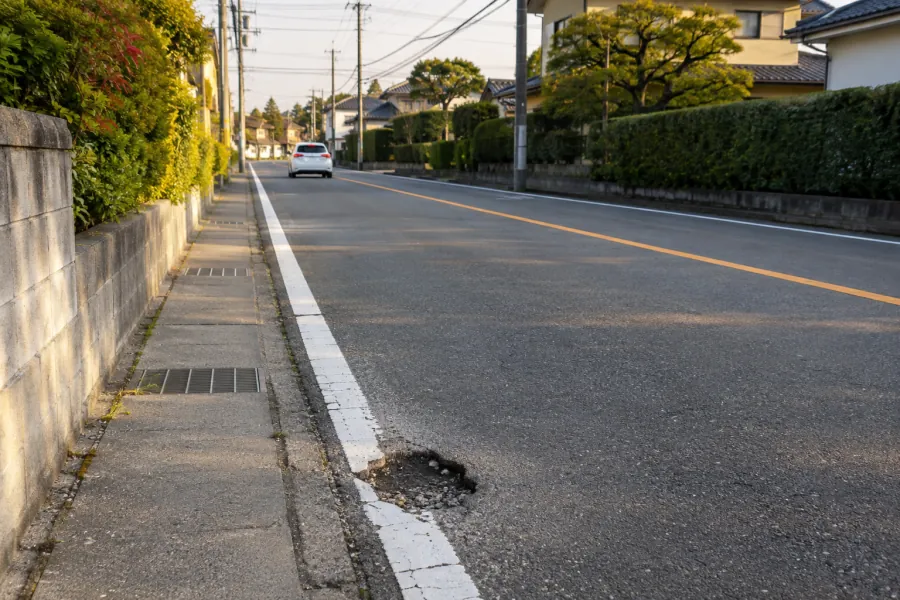
Call when you need a pothole dealt with urgently, and use LINE, which sends a photo and your location, when you want to pinpoint the spot. Japan's national Road Emergency Dial (#9910) accepts reports of problems on any road in the country 24 hours a day, by phone or by LINE. If you know whose road it is, you can also report through that municipality's LINE account or app. If there has been an accident, call 110.
Phone or LINE: which should you use?
| Phone (#9910) | LINE (#9910) | Municipal LINE or app | |
|---|---|---|---|
| Roads covered | All roads in Japan | All roads in Japan | Roads managed by that municipality |
| How you report | Describe the place and problem by voice | Send a photo and location | Send a photo and location (varies by municipality) |
| Best when | It is urgent, e.g. cars cannot avoid the hole | The place is hard to describe in words | You know it is a municipal road |
A phone call gets through on the spot. If the hole is large and cars or motorcycles cannot avoid it, call.
With LINE, the position on the map and the photo arrive as they are, so you don't need to explain "a little past such-and-such junction". People who find it hard to talk on the phone can also report this way (source: MLIT: road problems anywhere in Japan can now be reported via LINE). Using a phone while driving is dangerous, so stop the car before sending.
What do you send through #9910 on LINE?
Add "MLIT Road Emergency Dial (#9910)" as a friend on LINE and report from the chat. You choose these five things.
- The type of problem (potholes and bumps, fallen objects, damaged guardrails or signs, and so on)
- More detail on what happened
- A photo (you can choose not to send one)
- The type of road (expressway or toll road, or ordinary road)
- Your location (adjustable from where you are now)
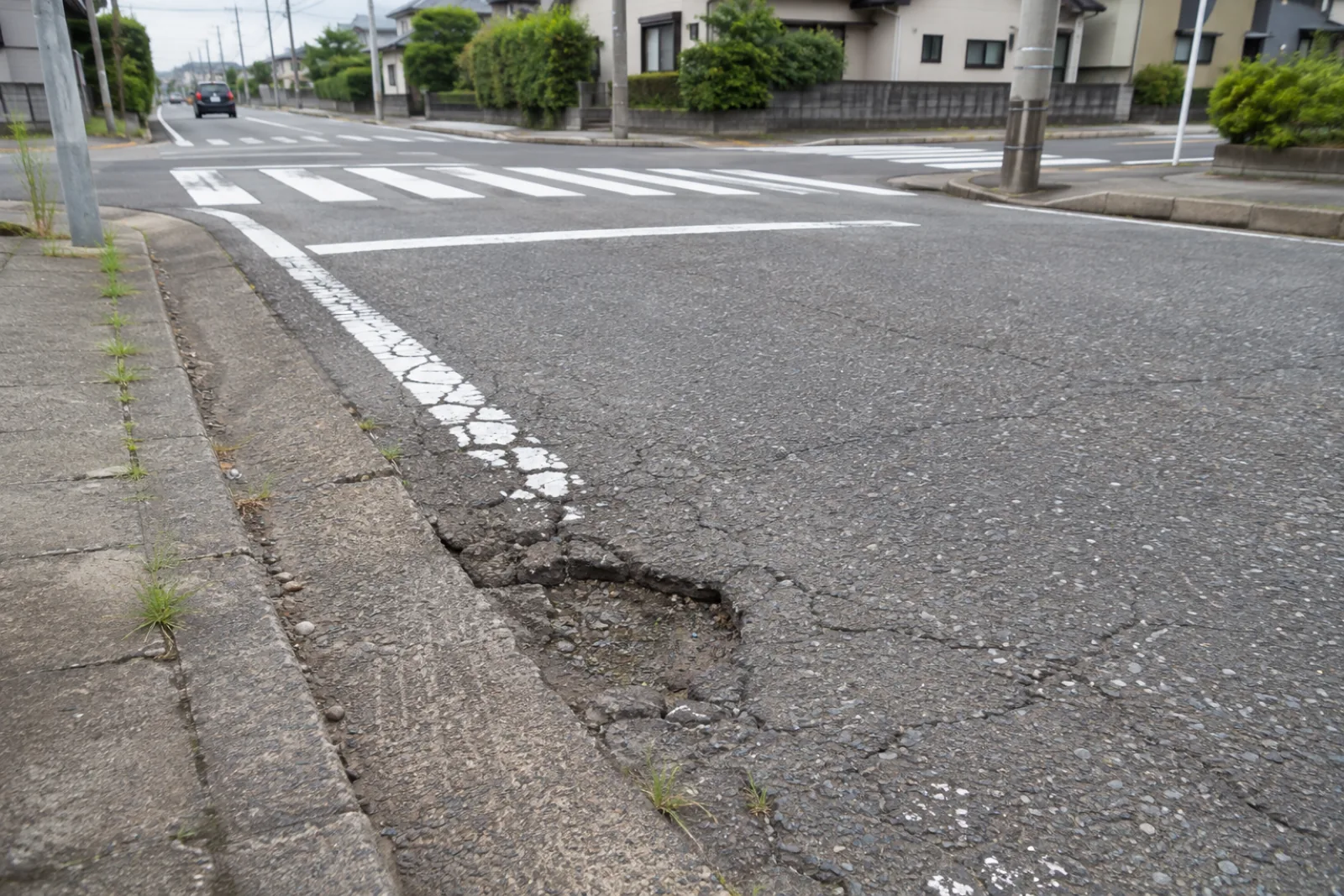
Rather than a close-up of the hole alone, a photo that shows the surroundings, such as a junction or a utility pole, makes the spot easier for the road manager to find. Anything else you want to add can be sent as text at the end.
Reports about things other than roads, or about private roads and other private land, are not accepted.
How are municipal LINE accounts and apps different?
Some municipalities accept reports of road damage through their own official LINE account or smartphone app. Sending a photo and location works the same way as #9910 on LINE, but the report goes to that municipality's roads section. Some apps also show whether the reported damage has been repaired (source: Japan Road Association: case studies of new technology and good practice in road management).
These channels only cover roads managed by that municipality, so holes on national or prefectural roads go to #9910 or to the manager of that road. To find out whether a municipality has such a channel, search for its name with "road report" (道路 通報). How to tell whose road it is is covered in National, prefectural or municipal road: how do you tell?
If you report at night or on a holiday, when is it seen?
#9910 accepts reports 24 hours a day by phone and LINE. However, on roads managed by prefectures and others, problems may not be dealt with quickly at night, at weekends or on public holidays (source: MLIT: Road Emergency Dial).
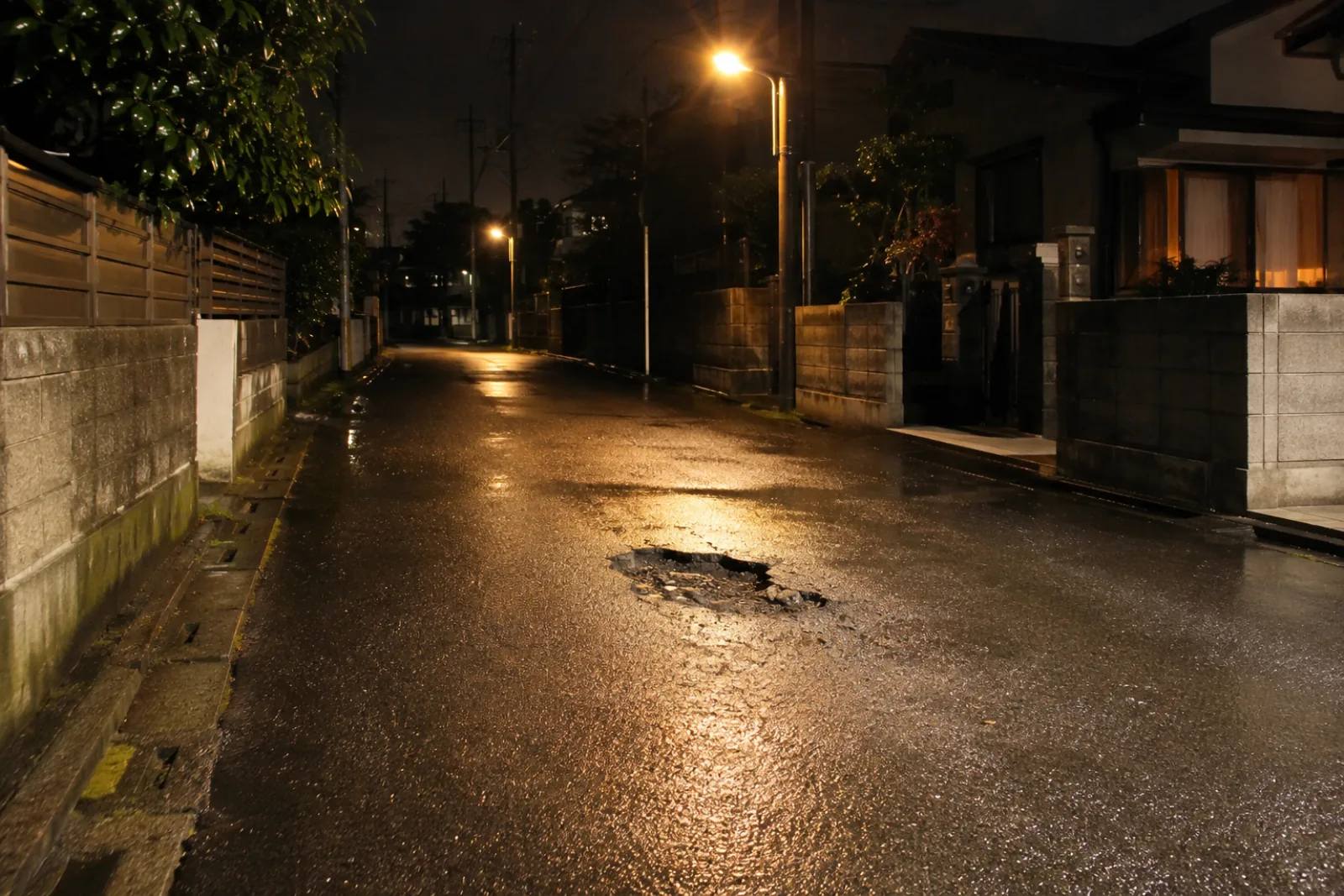
Except on national roads and expressways, checking that a report has been received is in principle done during office hours. If you find a hole at night that looks likely to cause an accident soon, call.
Why don't you get a reply?
#9910 does not reply to the people who report. A report does not always lead to a repair; whether and how to repair is decided by each road manager (MLIT, Road Emergency Dial).
How municipal channels reply differs from one municipality to another. If you want to know whether a hole has been fixed, ask that municipality's roads section.
Read next Who do you contact when you find a hole in the road? / National, prefectural or municipal road: how do you tell?
For road managers I run MICHIKARTE, a service that lets road users record damage they find with a smartphone and passes it on to road managers.
Last checked: 14 November 2026