How long does a bridge last? Why bridges over 50 years old are still in use
A bridge's lifespan is not set by its age. In Japan, "50 years old" is a convenient line the government uses to count ageing; in practice each bridge is inspected every five years, rated on a four-level scale and repaired while it stays in use. What the levels mean, what happens to bridges that are closed, and how to look up a bridge near you.
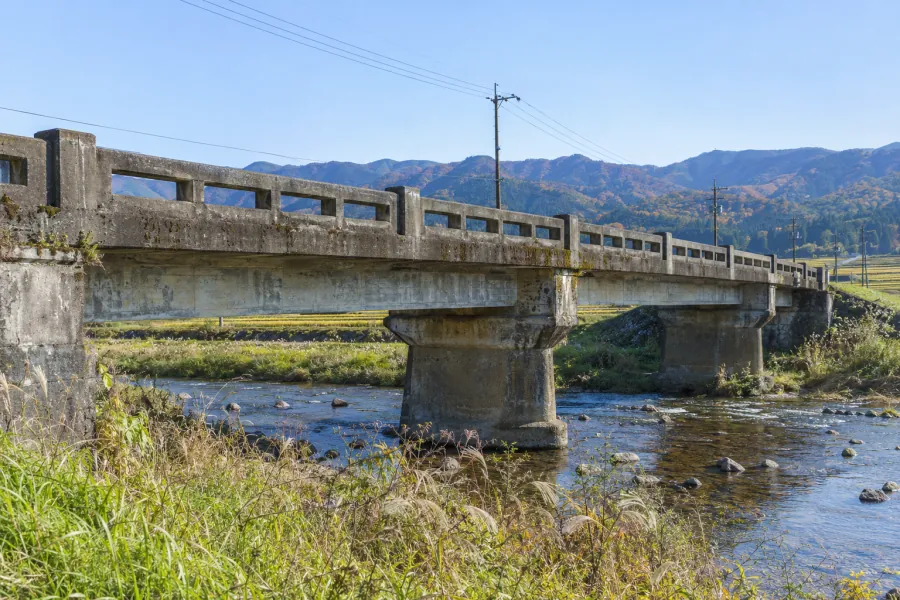
A bridge's lifespan is not fixed by how many years ago it was built. The "50 years old" you often hear in the news is a convenient line the government uses to count how infrastructure is ageing. In practice, every bridge is inspected every five years, rated on a four-level scale, and repaired while damage is still small so it can stay in use. Anyone can look up the inspection results for nearby bridges on the national "damage map", and if you notice worrying damage while crossing a bridge, you can report it to the Road Emergency Dial (#9910).
How many years until a bridge wears out?
Age alone does not decide it. MLIT itself notes that how infrastructure ages is not set uniformly by the year it was built but differs with its surroundings and upkeep, and only for convenience draws the line at "50 years after construction" (source: MLIT: Current state and future of ageing infrastructure).
Even among bridges built in the same year, those near the sea that catch salty wind, or those that get de-icing salt in winter, see their steel bars rust more easily. Bridges whose paint has been renewed and whose cracks have been sealed early can be in good shape for their age.
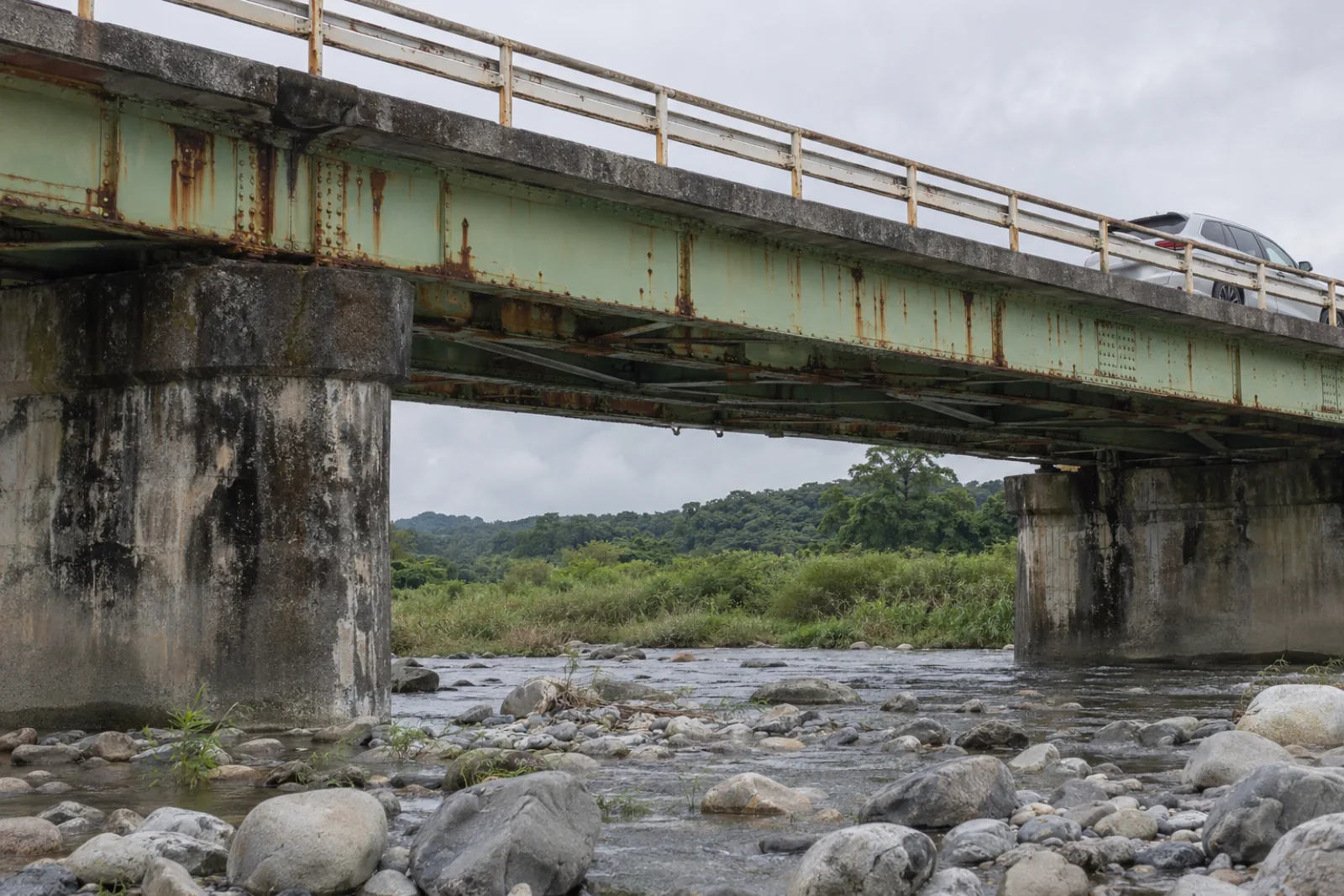
Bridges built from now on are designed to last longer. In 2017 the government revised the design standard for bridges (the Specifications for Highway Bridges), setting 100 years as the standard period over which a bridge keeps its performance, on the assumption that it is properly maintained (source: MLIT: Revision of the Specifications for Highway Bridges). How easy a bridge is to inspect and how its parts can be replaced are now considered at the design stage.
How is it decided whether an old bridge is safe?
The national government, prefectures, municipalities and expressway companies that manage roads inspect every bridge once every five years and rate its condition on the four levels below. These inspections became mandatory in fiscal 2014.
| Level | Condition of the bridge |
|---|---|
| I Sound | The bridge works without problems |
| II Preventive maintenance stage | No problem yet, but it is better to act early |
| III Early action stage | Problems may appear; repair soon |
| IV Urgent action stage | Problems have appeared or are very likely; act at once |
In the latest results, as of the end of fiscal 2024, of about 724,000 bridges nationwide, 43% were level I, 50% level II, 7% level III and 0.1% (623 bridges) level IV (source: MLIT: Results of the fiscal 2024 inspections of bridges and other structures).
The number of bridges more than 50 years old rose from about 130,000 at the end of fiscal 2018 to about 230,000 at the end of fiscal 2024. Over the same period, bridges rated level III or IV fell from about 69,000 to about 53,000. Even as old bridges increase, repairs have steadily cut the number of bridges that need fixing soon.
What happens to bridges that need urgent repair?
A bridge rated level IV is closed at once, or the vehicles or lanes allowed on it are limited. A level III bridge must be dealt with, for example repaired, before the next inspection, that is, within five years (MLIT: Results of the fiscal 2024 inspections).
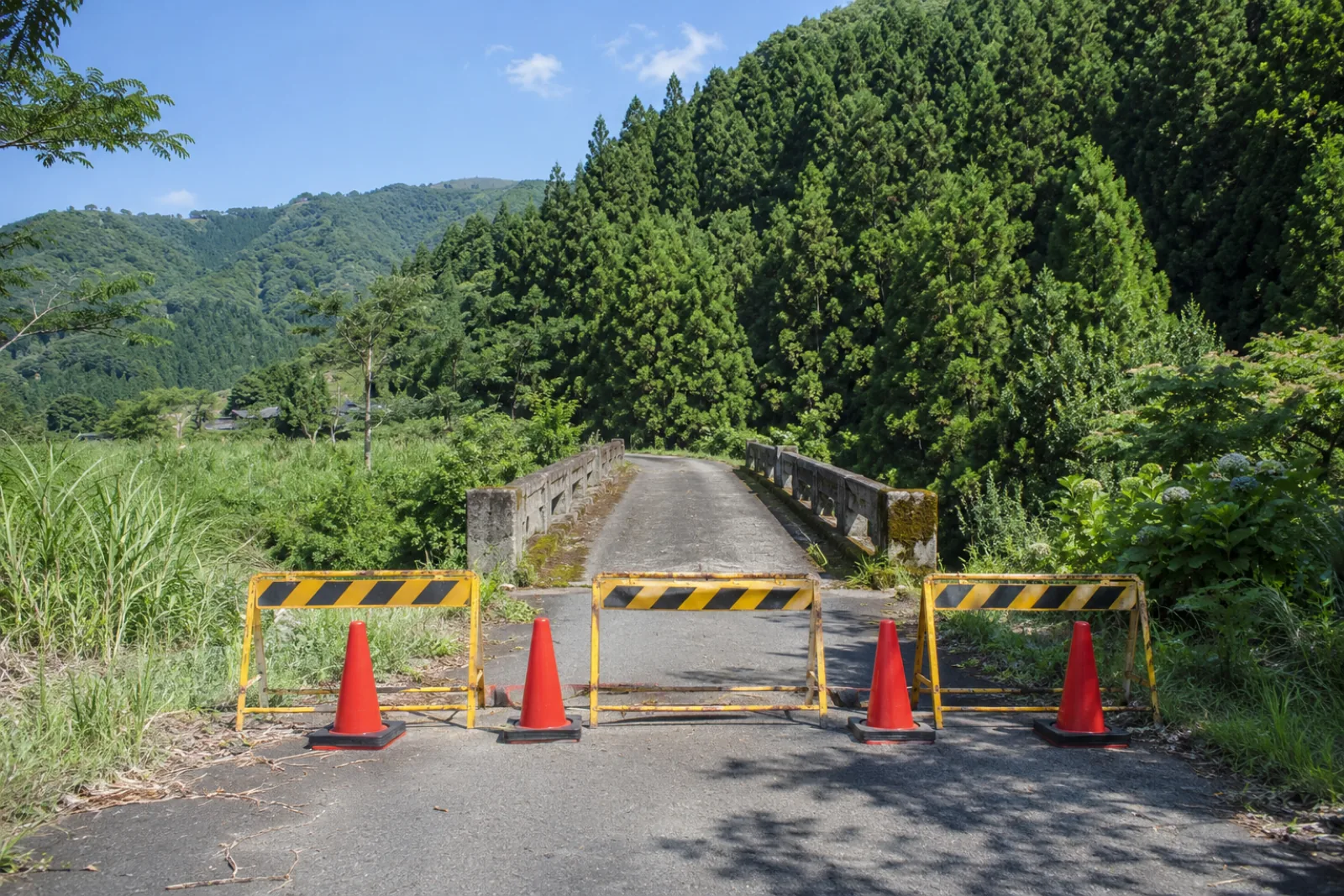
For some bridges, stopping use is better than repairing them. A bridge with another bridge nearby and little traffic may be merged into another crossing (consolidation) or taken down (removal). As of the end of fiscal 2024, 92% of prefectures and municipalities nationwide were considering such consolidation or removal (same source). How long a bridge stays in use depends not only on its damage but also on how much it is used.
Why repair early instead of waiting for failure?
Because it costs less. Repairing damage while it is still small is called preventive maintenance; repairing after problems appear is called corrective maintenance.
When MLIT estimated future costs for all the infrastructure under its jurisdiction, such as roads and rivers, continuing corrective maintenance would make the annual cost in fiscal 2048 about 2.4 times that of fiscal 2018. Switching to preventive maintenance is expected to make the annual cost in fiscal 2048 about 50% lower than with corrective maintenance, and the 30-year total about 30% lower (source: MLIT White Paper 2020).
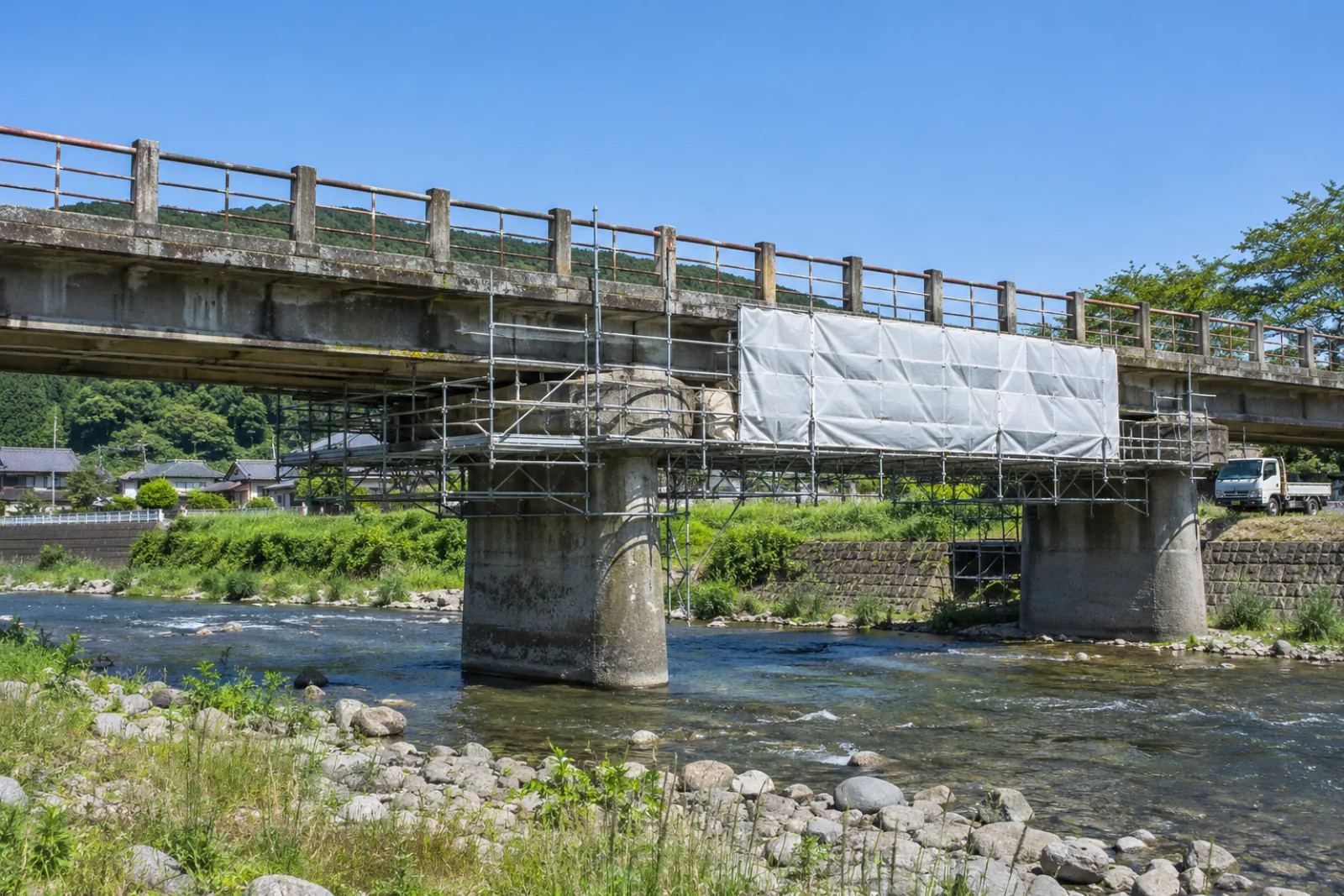
Half of all bridges nationwide are rated level II. They have no problem now, but acting at this stage means they can be repaired before they reach level III or IV.
Can you look up the inspection results of a bridge near you?
Yes. The MLIT Road Bureau publishes the current condition and repair status of bridges, tunnels, pedestrian overpasses and more, as found by inspections, on the "National Road Facility Inspection Database: Damage Map". Anyone can view it after agreeing to the terms of use.
If you notice something while crossing a bridge, such as a broken railing or a hole or large step in the road surface, please report it to the road manager or to the Road Emergency Dial (#9910). Besides calling, you can also report to #9910 through LINE (source: MLIT: Road Emergency Dial (#9910)). If you are not sure where to report, see LINE, app or phone: which is best for reporting a pothole?
Read next Why has AI started to be used for road inspection? / Why do bridges freeze before the rest of the road? Which days to watch, and why you slow down before the bridge
For road managers I run MICHIKARTE, a service that lets road users record damage they find with a smartphone and passes it on to road managers.
Last checked: 18 November 2026
References (in Japanese)
- MLIT: "Current state and future of ageing infrastructure"
- MLIT Road Bureau: "Results of the fiscal 2024 inspections of bridges and other structures: Road Maintenance Annual Report (3rd cycle, year 1)" (25 August 2025)
- MLIT: "Revision of the technical standard for bridges and elevated roads (Specifications for Highway Bridges)" (21 July 2017)
- MLIT White Paper 2020: "Section 2: Toward a sustainable infrastructure maintenance cycle"
- MLIT Road Bureau: "National Road Facility Inspection Database: Damage Map"
- MLIT: "Road Emergency Dial (#9910)"