What is Japan's tyre chain restriction? The sections you can't pass even on studless tyres, and where to fit chains
Under a chain restriction, only vehicles with tyre chains fitted may pass in heavy snow. Studless tyres or four-wheel drive are not enough without chains. The 13 sections across Japan where it applies, where and on which wheels to fit chains, and how to find out when a restriction is likely.
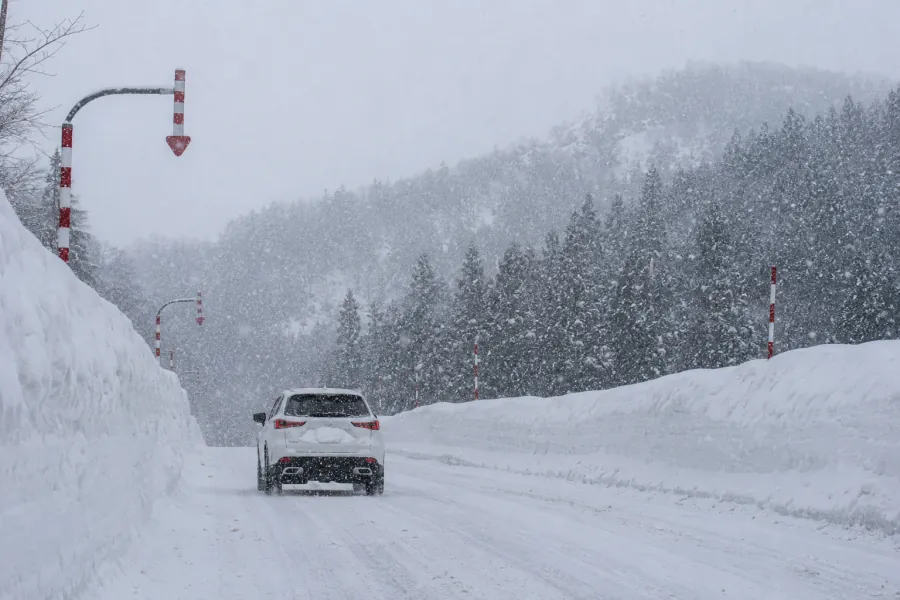
A chain restriction lets only vehicles with tyre chains fitted pass during heavy snow. Studless winter tyres or four-wheel drive are not enough: without chains you cannot go through. It applies on 13 sections across Japan, mostly mountain passes. If your winter route crosses one of them, keep chains in the car.
How is it different from a winter tyre restriction?
The difference is whether studless tyres alone get you through. The winter tyre restriction, the one you usually see on expressways on snowy days, can be passed with winter tyres such as studless tyres, or with tyre chains fitted.
Under a chain restriction, winter tyres alone are not enough. Before the restricted section, staff check whether you are carrying chains and whether they are fitted (source: NEXCO Central: winter traffic restrictions you need to know).
| Restriction | Studless tyres only | Chains fitted |
|---|---|---|
| Winter tyre restriction | Can pass | Can pass |
| Chain restriction | Cannot pass | Can pass |
A restricted section is marked with a round blue sign showing a tyre wrapped in chains. The sign means "closed to vehicles without tyre chains" and was newly defined in December 2018 (source: MLIT Hokuriku Regional Development Bureau).
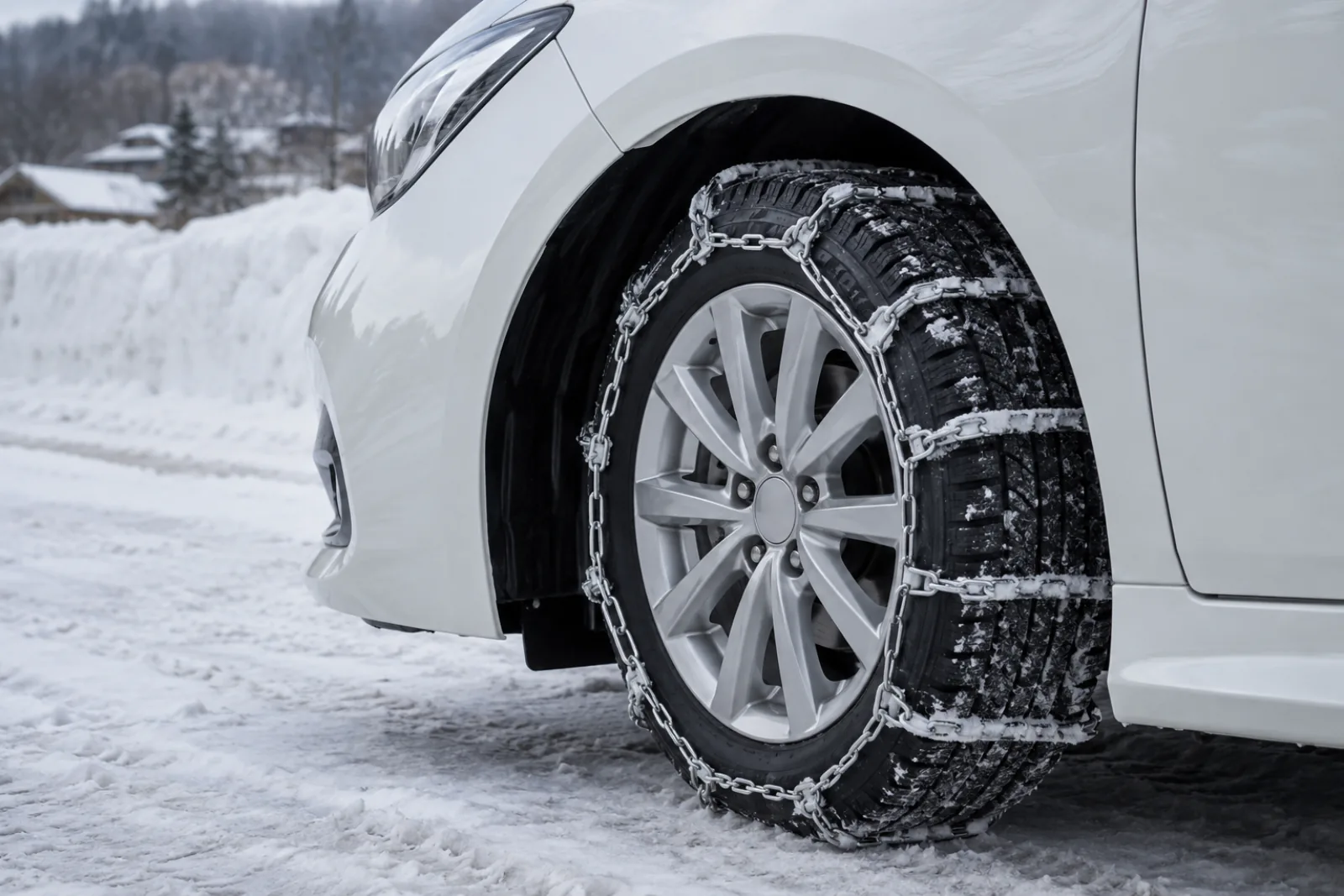
Why can't studless tyres or four-wheel drive pass?
Because on a pass in heavy snow, even cars on studless tyres can get stuck partway up the slope. Once one car stops, the cars behind cannot move, and the snowploughs cannot get in either.
Four-wheel drive is often thought of as safe on snow, but these vehicles are heavy, so they take longer to stop when braking hard on a downhill. That is why four-wheel-drive vehicles also need chains to pass (source: MLIT: about chain restrictions).
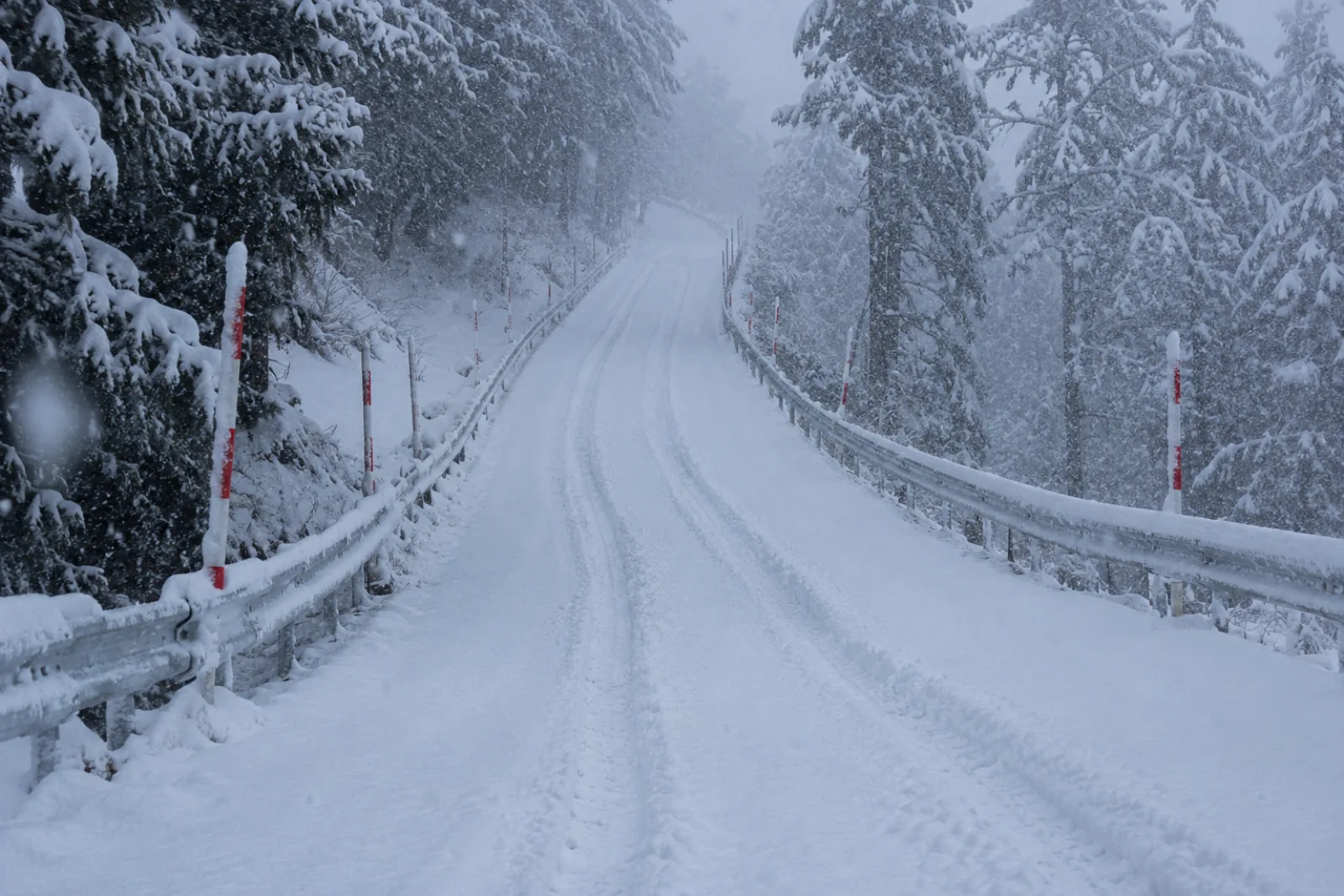
A chain restriction is also a way to let more vehicles through. Until now, heavy snow meant closing the road to everyone. Letting vehicles with chains pass is meant to shorten the time the road is closed.
When and where is it applied?
It is applied in exceptional snowfall, the kind that brings a heavy snow emergency warning or an emergency announcement on heavy snow. It is not issued every time it snows.
The places are sections such as passes with steep slopes where vehicles have been stranded or the road has been closed by snow in the past. MLIT lists 13 sections: 6 on national roads managed by the national government and 7 on expressways.
National roads
| Road | Prefecture | Section |
|---|---|---|
| Route 112 | Yamagata | Gassan Road (Gassanzawa, Nishikawa to Tamugimata, Tsuruoka) |
| Route 138 | Yamanashi / Shizuoka | Hirano, Yamanakako to Subashiri, Oyama |
| Route 7 | Niigata | Osudo to Kami-Otori, Murakami |
| Route 8 | Fukui | Kumasaka to Sasaoka, Awara |
| Route 54 | Hiroshima / Shimane | Akana Pass (Funo, Miyoshi to Kami-Akana, Iinan) |
| Route 56 | Ehime | Tosaka Pass (Uwa, Seiyo to Kitatada, Ozu) |
Expressways
| Expressway | Prefecture | Section |
|---|---|---|
| Joshin-etsu Expressway | Niigata / Nagano | Shinanomachi IC to Arai PA (inbound) |
| Chuo Expressway | Yamanashi | Sutama IC to Nagasaka IC |
| Chuo Expressway | Nagano | Iida-Yamamoto IC to Sonohara IC |
| Hokuriku Expressway | Ishikawa / Fukui | Maruoka IC to Kaga IC |
| Hokuriku Expressway | Fukui / Shiga | Kinomoto IC to Imajo IC |
| Yonago Expressway | Okayama / Tottori | Yubara IC to Kofu IC |
| Hamada Expressway | Hiroshima / Shimane | Oasa IC to Asahi IC |
If the road to a ski resort or to your family home crosses one of these sections, it is worth having chains ready even if you have already switched to studless tyres. When to switch is covered in When should you switch to studless winter tyres?
Where do you fit the chains?
Fit them at a service area, a parking area, or a chain bay (a parking space set aside for fitting and removing chains). Stopping in a traffic lane or on the shoulder to fit them is dangerous.
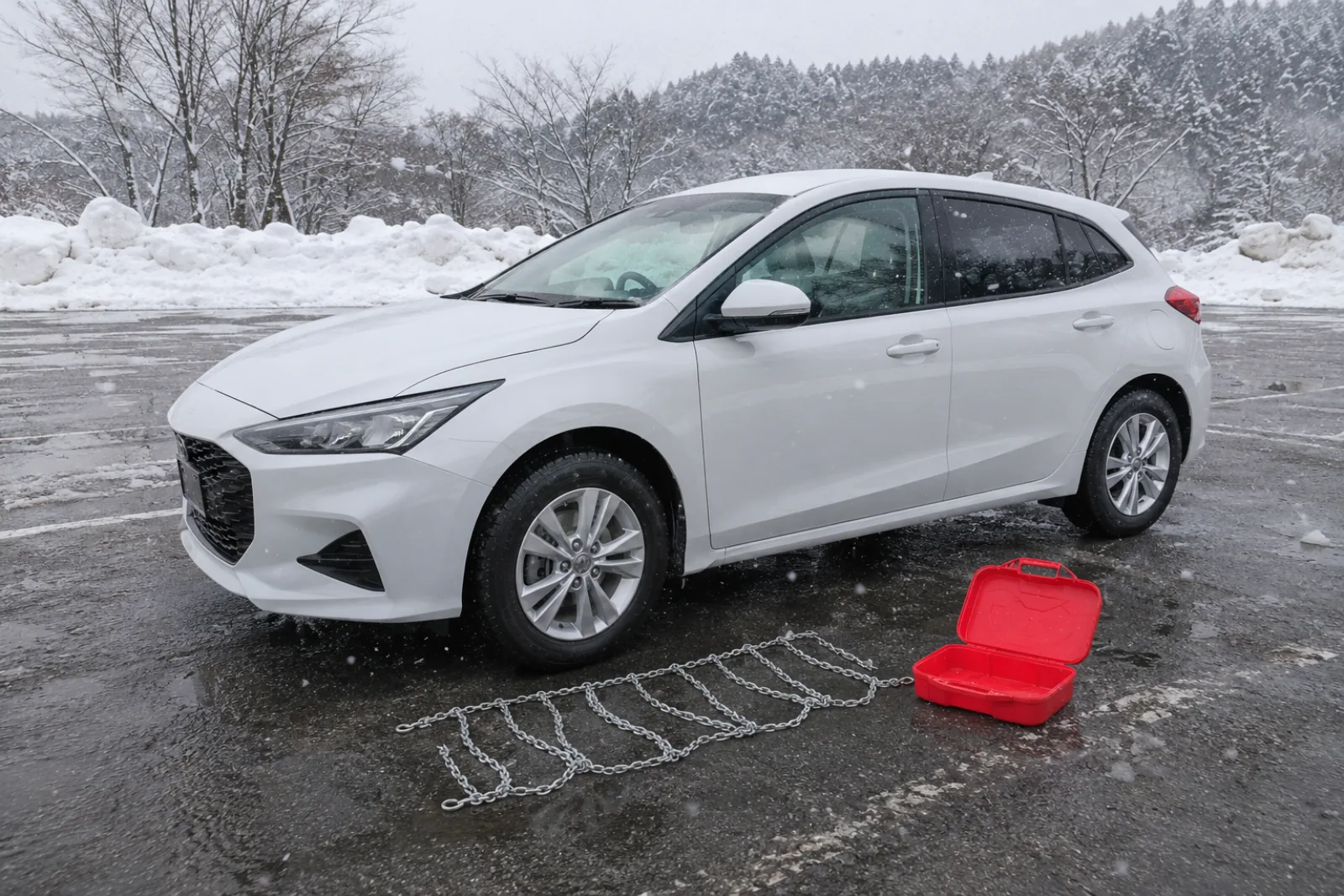
Chain restriction sections are chosen where there is a place to fit chains before them. If a restriction starts while you are on the expressway and you are carrying chains, you can fit them at the nearest service or parking area and carry on. If you are not carrying any, you will have to leave at the nearest interchange.
Chains can break if they stay on for a long time. At long tunnels and runs of tunnels, take them off and refit them at the chain bays before and after (NEXCO Central).
Which wheels, and what kind of chains?
Fit them to the drive wheels (the wheels turned by the engine): the front wheels on a front-wheel-drive car, the rear wheels on a rear-wheel-drive car. Four-wheel-drive cars differ, so check the owner's manual (source: NEXCO West: tyre chains).
Any chains sold at car accessory shops will do. Besides metal chains, rubber or resin types and fabric covers are accepted. Spray-on traction products are not (MLIT: about chain restrictions).
If you have never used chains, try fitting them once on a day without snow. Opening the box and reading the instructions in heavy snow is hard work.
How do you find out when a restriction is likely?
MLIT announces the possibility of road closures two to three days before heavy snow is expected (source: MLIT press release). Before you set off, check the weather forecast and the notices from the expressway company or national highway office for your route.
While driving, the roadside information boards and highway radio (AM 1620 kHz) tell you about restrictions. On days when heavy snow is forecast, moving your trip or choosing a route that avoids the restricted sections is another option.
Read next When should you switch to studless winter tyres? The temperature at which roads start to freeze / Why do bridges freeze before the rest of the road?
For road managers I run MICHIKARTE, a service that lets road users record damage they find with a smartphone and passes it on to road managers.
Last checked: 24 November 2026
References (in Japanese)
- MLIT: "About chain restrictions"
- MLIT press release: "Securing road traffic in heavy snow (status of the chain restriction review)" (10 December 2018)
- MLIT Hokuriku Regional Development Bureau and others, press release: "Fit tyre chains in concentrated heavy snow: chain restriction sections set" (27 December 2018)
- NEXCO Central: "Winter traffic restrictions you need to know"
- NEXCO West: "Tyre chains"