When should you switch to studless winter tyres? The temperature at which roads start to freeze
Once the outside temperature drops to 3°C or below, roads can freeze even on clear days. Switch to studless tyres before snow is forecast. Why it is worth switching even where it rarely snows, and how to tell whether last year's tyres can still be used (the platform marker).
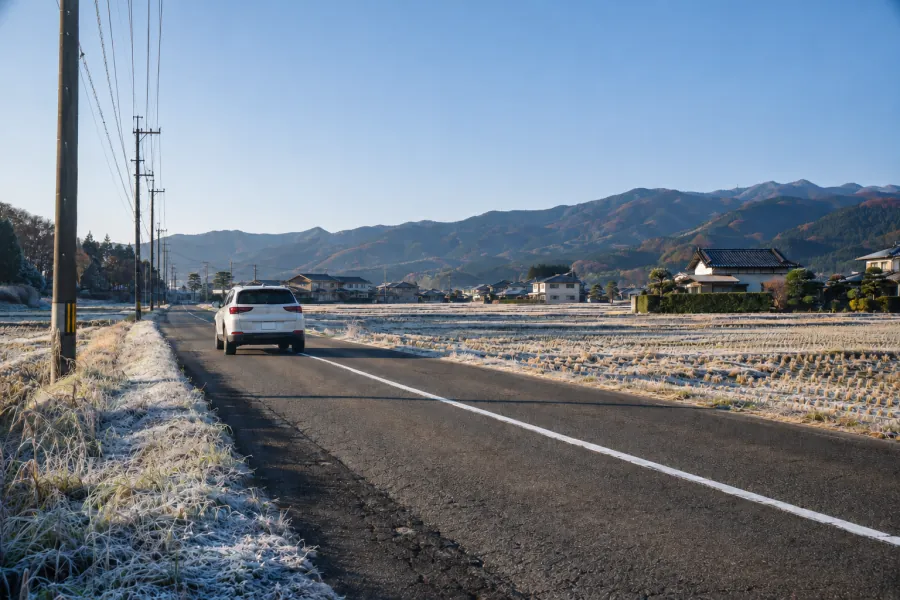
Switch to studless winter tyres before snow is forecast and before morning temperatures start dropping below 3°C. Once the outside temperature is 3°C or below, the road can freeze even when it is not snowing. Before switching, check that at least half of the original tread depth remains.
At what temperature do roads start to freeze?
JAF advises drivers to watch for ice once the outside temperature drops to 3°C or below. Even in fair weather, and even when the air is above 0°C, the road surface can freeze (source: JAF Mate Online). If your car has an outside temperature display, 3°C is a useful guide.
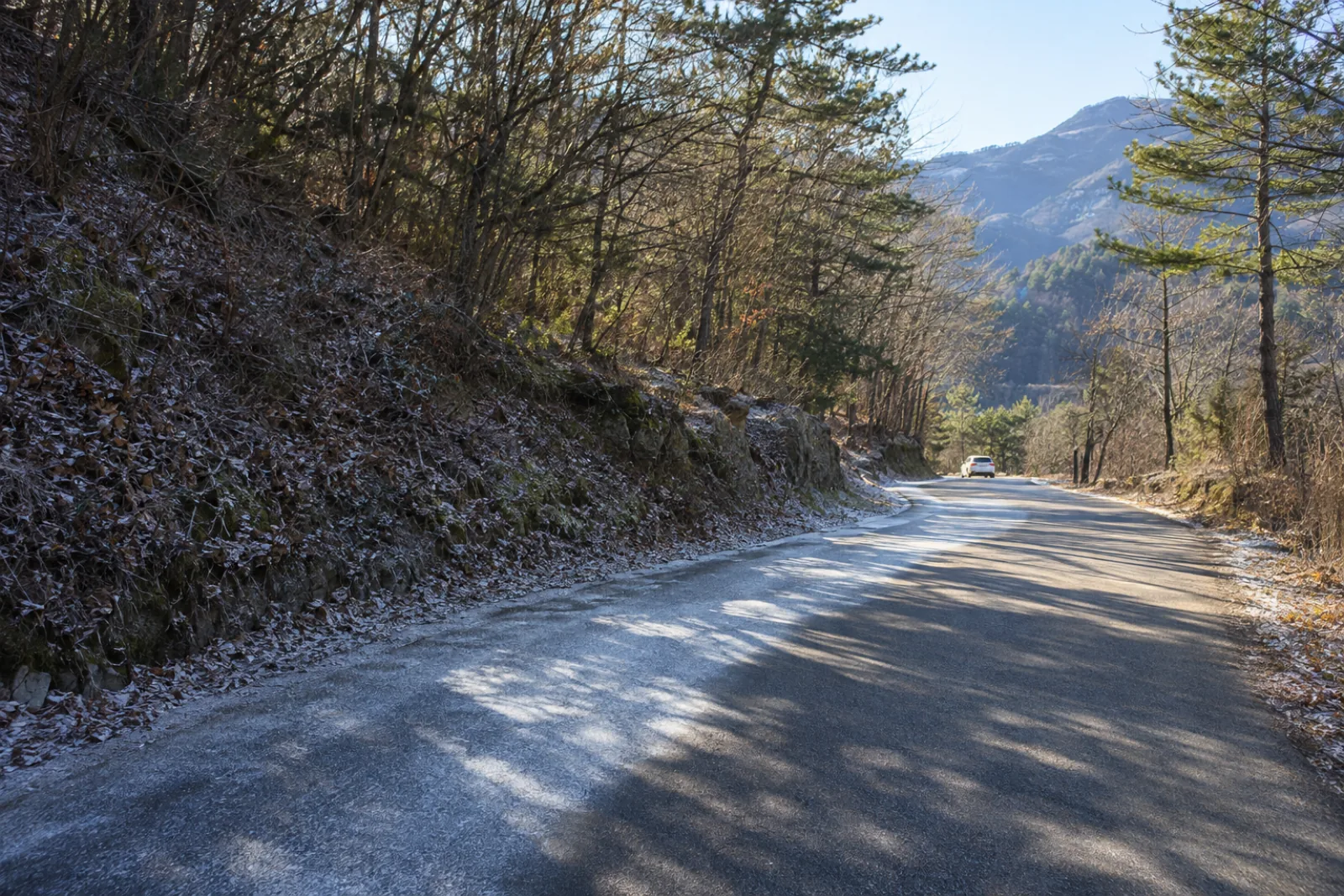
Ice is most likely from night into morning, and on bridges, at tunnel entrances and exits, and in places the sun does not reach. Why bridges freeze first is covered in Why do bridges freeze before the rest of the road?
By when should you switch?
The Japan Automobile Tyre Manufacturers Association (JATMA) urges drivers to switch to winter tyres and finish running them in before snow is forecast (source: JAF Mate Online: JATMA's three rules for winter tyres).
New studless tyres are run in by driving at least 100 km on dry roads at 80 km/h or less. Fit winter tyres on all four wheels.
Should you switch even where it rarely snows?
It is safer to. Accidents caused by sudden snow or ice happen even in areas where snow is rare, such as Tokyo, Aichi, Osaka, Hiroshima and Fukuoka (source: JATMA: why winter tyres are needed).
Driving on snowy or icy roads without winter tyres or chains breaks the rules of every prefecture except Okinawa. The fine for an ordinary car is 6,000 yen. On expressways in snowy mountain areas, restrictions requiring chains even on studless tyres are sometimes imposed (source: JAF Mate Online).
Can last year's studless tyres still be used?
On snow and ice, tyres must have at least 50% of their original tread depth left. If the small step in the groove called the "platform" has come up level with the surface, the tyre can no longer be used as a winter tyre (source: JATMA: winter driving and tyres).
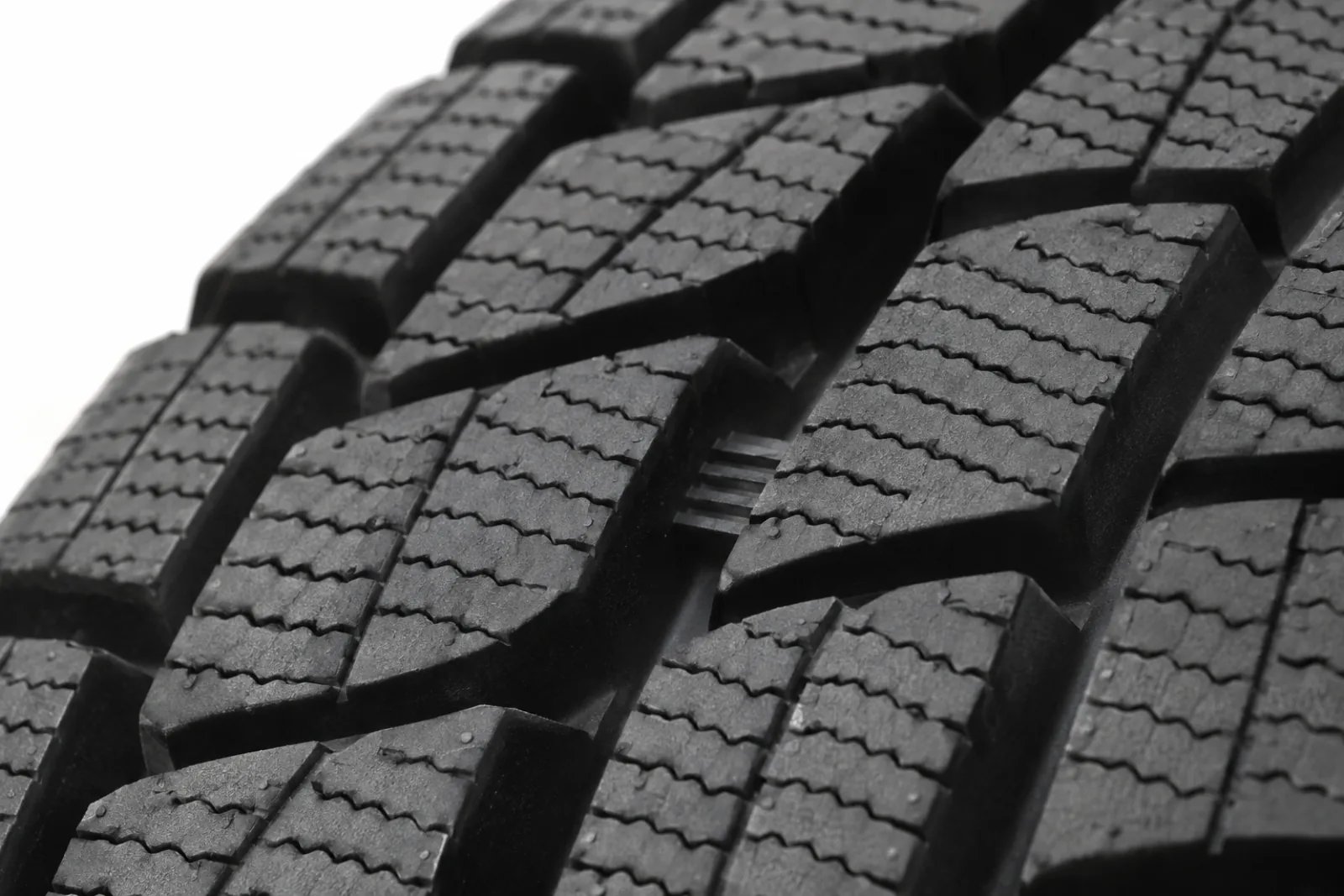
Even with tread remaining, the rubber cracks and hardens over time. About three years from first use is the guide for how long to use them (source: MLIT Chubu Regional Development Bureau, Mie River and National Highway Office: what studless tyres do).
Read next Why do bridges freeze before the rest of the road? / What is the white powder spread on roads in winter? Does it rust your car?
For road managers I run MICHIKARTE, a service that lets road users record damage they find with a smartphone and passes it on to road managers.
Last checked: 14 November 2026
References (in Japanese)
- JAF Mate Online: "Protecting yourself from black ice before winter driving"
- JAF Mate Online: "Change to winter tyres before it snows: JATMA's three rules"
- JAF Mate Online: "Driving on snow with summer tyres breaks the law, with a 6,000 yen fine"
- Japan Automobile Tyre Manufacturers Association: "Why winter tyres are needed"
- Japan Automobile Tyre Manufacturers Association: "Winter driving and tyres"
- MLIT Chubu Regional Development Bureau, Mie River and National Highway Office: "What studless tyres do"