What is the white powder spread on roads in winter? Does it rust your car?
The white powder spread on winter roads is de-icing agent, and on national roads it is mainly sodium chloride (salt). How it differs from "snow-melting agent" and calcium chloride, and who spreads it and when, plus how to wash your car to prevent rust.
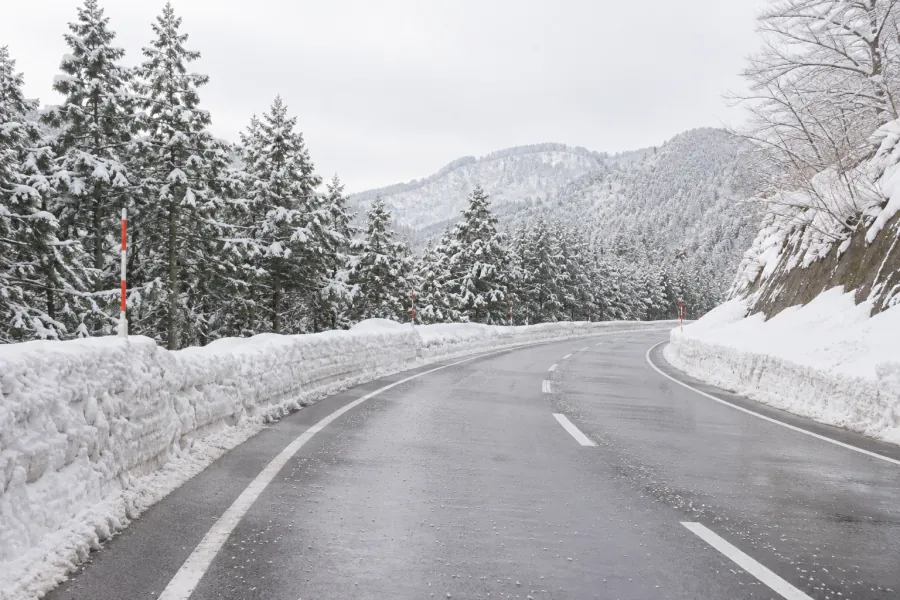
The white powder spread on winter roads is de-icing agent, and on national roads it is mainly sodium chloride, in other words salt. It lowers the temperature at which water freezes, so the road surface is less likely to ice over. Salt makes metal rust, so after driving on a salted road, wash your car with water, including the underside.
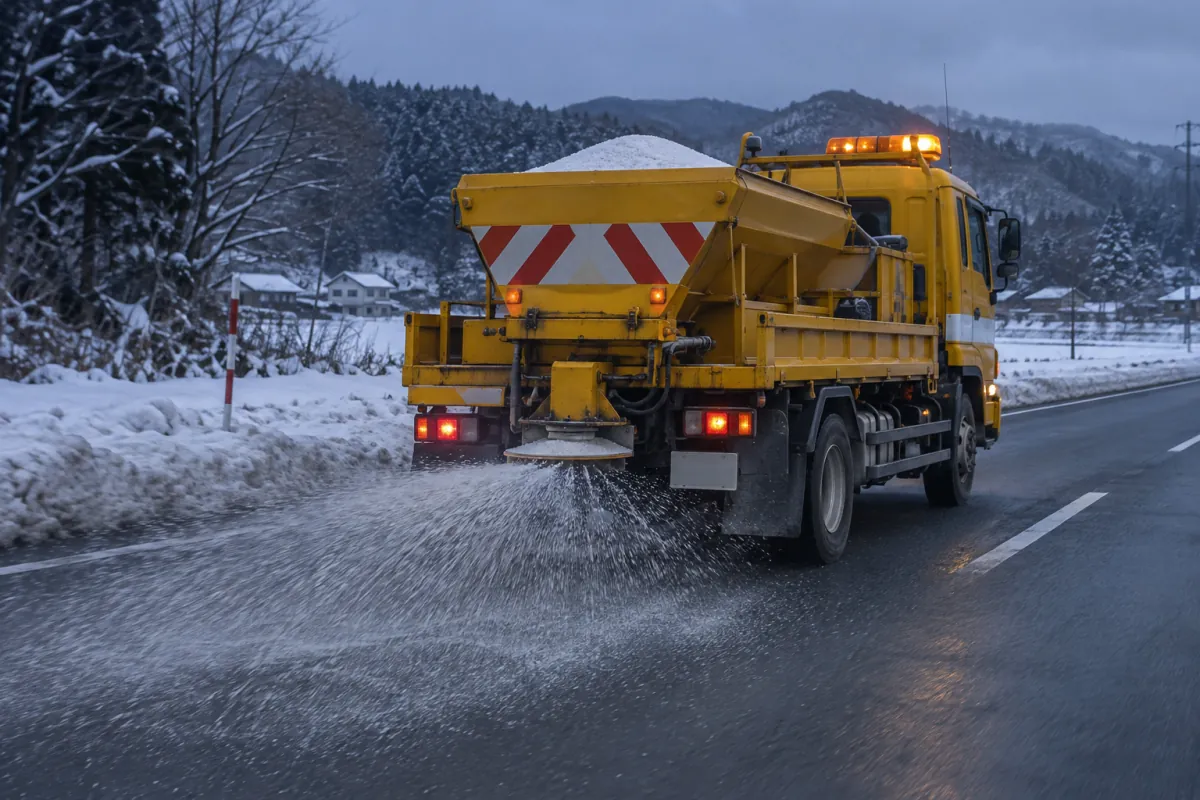
How is de-icing agent different from snow-melting agent?
De-icing agent does two jobs: it keeps water on the road from freezing, and it melts ice already on the surface. This works because dissolving salt in water lowers its freezing point below 0°C (source: Civil Engineering Research Institute for Cold Region).
It is also called "snow-melting agent", but what is spread on roads is the same sodium chloride or calcium chloride. National road offices and research institutes call it "de-icing agent".
Of the de-icing agent spread by the Hokkaido Regional Development Bureau, 99% is chloride-based, such as sodium chloride. Acetate-based agents that cause less rust exist, but they cost more, so spreading them only in places such as bridges is considered appropriate.
How do sodium chloride and calcium chloride differ?
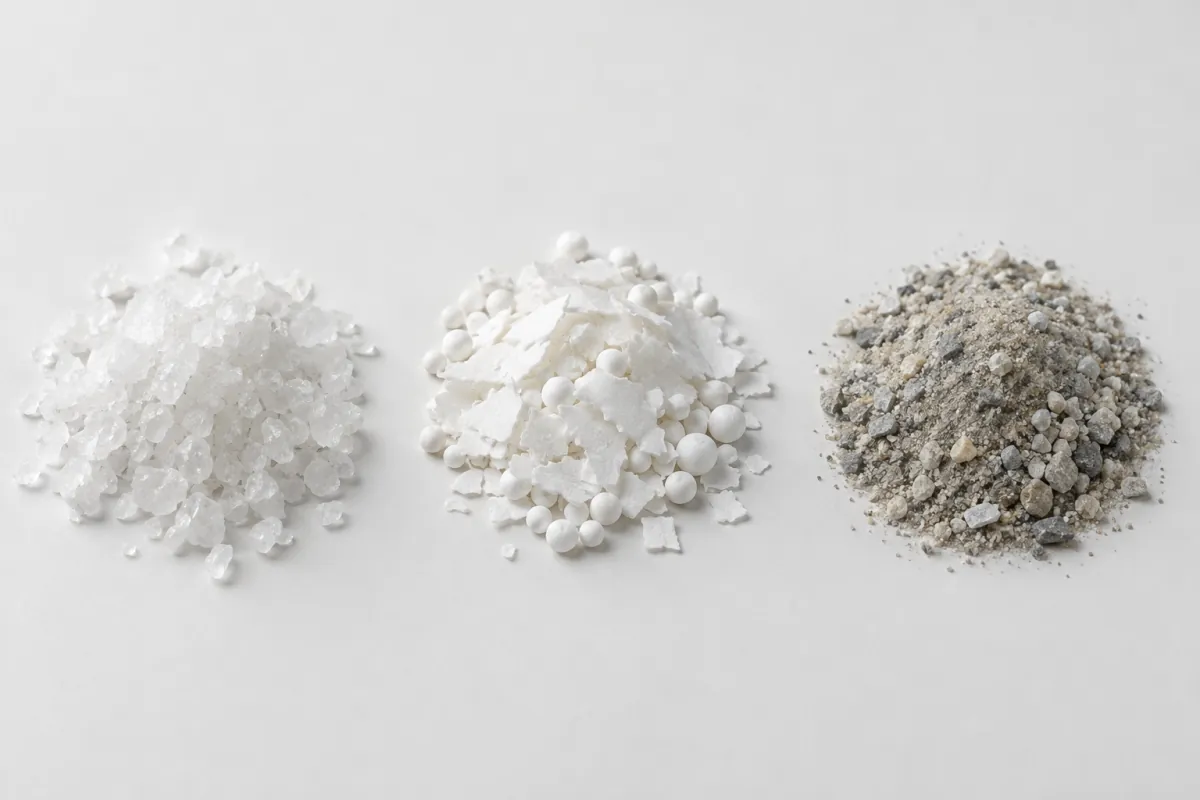
| Sodium chloride | Calcium chloride | |
|---|---|---|
| Starts working | Slowly | Quickly |
| How long it works | Long | Average |
| Price | Cheap | Expensive |
Right after spreading, calcium chloride melts about three times as much ice as sodium chloride. After about an hour, sodium chloride overtakes it and keeps on melting (source: MLIT Tottori River and National Highway Office).
Calcium chloride absorbs moisture easily, so it has to be stored with care. Its final ice-melting power is about 60% of that of sodium chloride.
What is spread on very cold days?
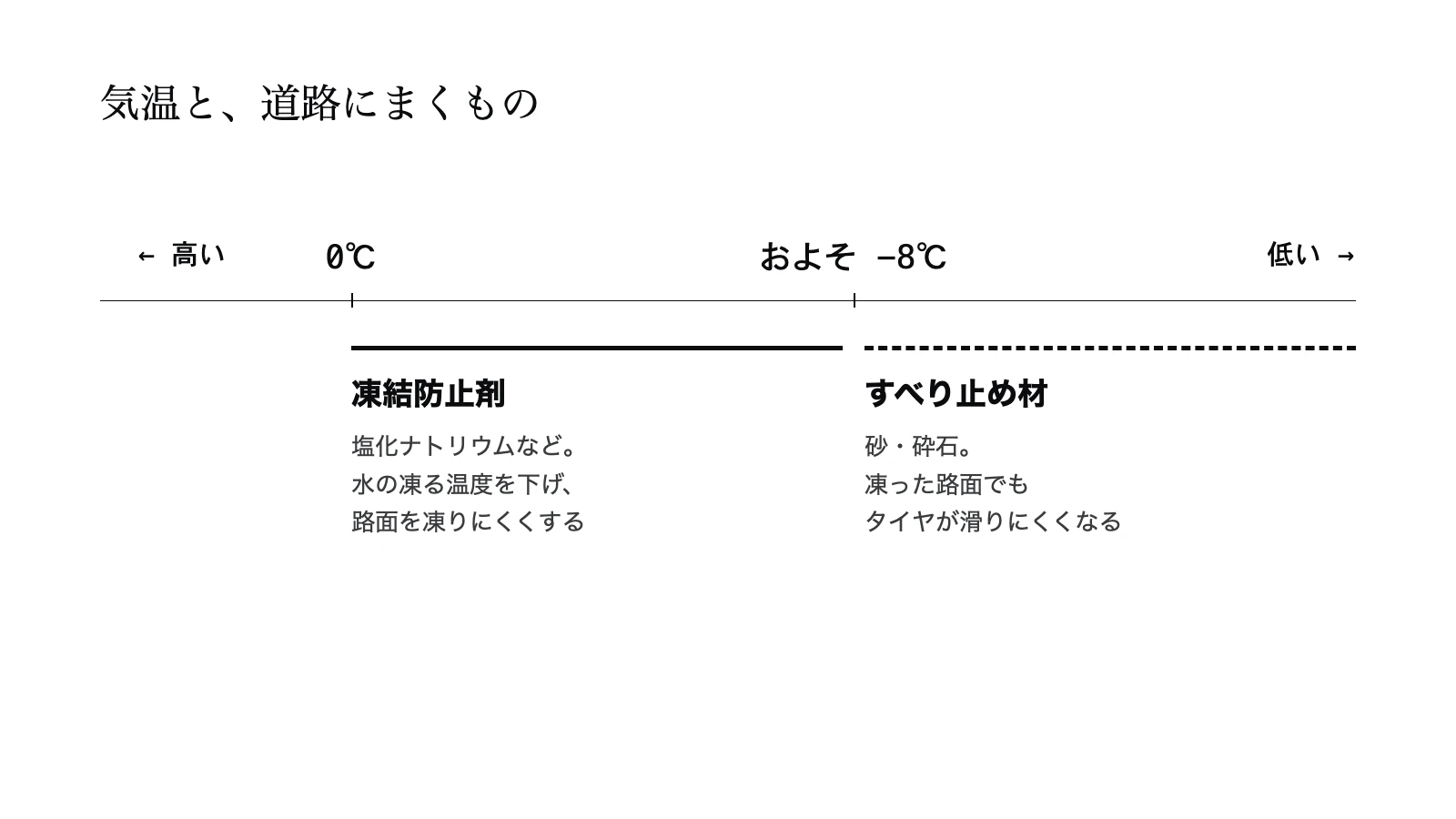
When the air temperature is below about −8°C, or snow lies thick on the road, de-icing agent cannot keep up, so anti-skid material such as sand or crushed stone is spread instead (source: Civil Engineering Research Institute for Cold Region).
Anti-skid material does not melt ice. It sits between the tyres and the road and makes them less likely to slip. Even within Hokkaido, cold and snowy areas such as Abashiri and Wakkanai use a higher share of anti-skid material.
Who spreads it, and when?
The road's manager spreads it. National roads managed by the national government are handled by national road offices, other national roads and prefectural roads by the prefecture, and municipal roads by the municipality. How to find the manager is covered in How to tell national, prefectural and municipal roads apart.
It is usually spread by spreader trucks from late at night to early morning, when the road is likely to freeze. In 2026, the first spreading of the winter took place on 29 October, at 1:05 a.m. on National Route 17 at the Niigata–Gunma border and at 0:15 a.m. on National Route 18 at the Niigata–Nagano border. Both used sodium chloride (sources: Nagaoka National Highway Office, Takada River and National Highway Office).
On Route 18, the first spreading came 20 days earlier than the previous winter. It is spread mainly where roads freeze easily, such as on bridges and on curves over mountain passes.
Does it rust your car? When should you wash it?
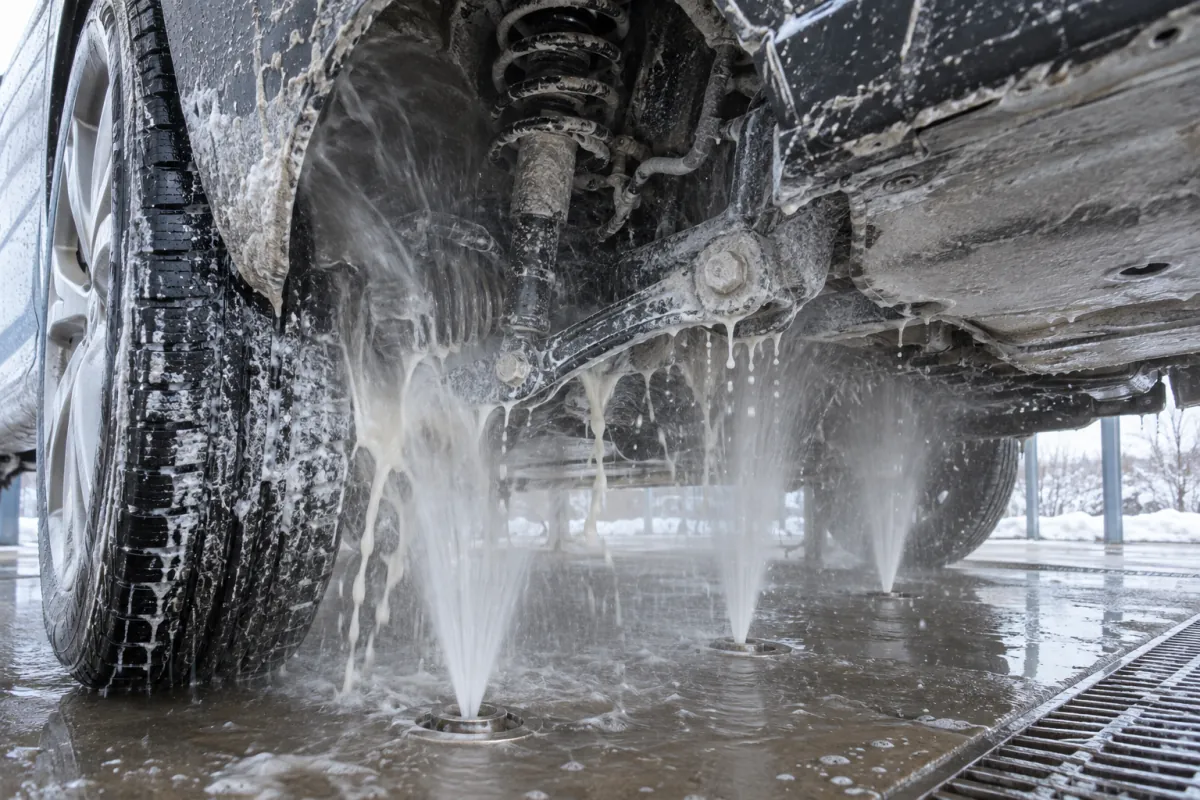
Yes. Chloride-based de-icing agents corrode metal. Salt thrown up by the tyres sticks to the underside of the car and around the tyres.
The Nagaoka National Highway Office recommends washing your car on the way home after driving on snowy roads. Places where the paint has come off and the base metal shows will certainly rust if left as they are (source: Nagaoka National Highway Office).
Rinse not only the body but also the underside and the inside of the wheel arches with water.
Can you spread it in front of your house?
Some municipalities give out de-icing agent for residents to spread on slopes and similar places. Check your municipality's website.
It can kill plants it lands on, and it rusts metal. Do not spread it near garden plants, bicycles or gates.
For road users: read next Why do potholes increase in early spring? / How to tell national, prefectural and municipal roads apart
For road managers I run MICHIKARTE, a service that lets road users record damage they find with a smartphone and passes it on to road managers.
Last checked: 3 November 2026
References (in Japanese)
- Civil Engineering Research Institute for Cold Region, Traffic Engineering Research Team: "About de-icing agents and anti-skid materials"
- MLIT Tottori River and National Highway Office: "Kōge Kokudō Tsūshin (1 March 2005): What are sodium chloride and calcium chloride?"
- MLIT Nagaoka National Highway Office: "First de-icing agent spreading of the winter on National Route 17" (29 October 2026)
- MLIT Takada River and National Highway Office: "De-icing spreader trucks out for the first time, 20 days earlier than last year" (29 October 2026)
- MLIT Shizuoka National Highway Office: "Watch out for snow and icy roads in winter"
- MLIT Nagaoka National Highway Office: "Q18. Should I wash my car right after driving on snowy roads?"