What AI can do for civil infrastructure, so what we have today lasts
Aging structures, tight budgets, harsh weather and fewer people to maintain them. What AI can do about the problems of keeping civil infrastructure in shape, and how Infra Intelligence thinks about it.
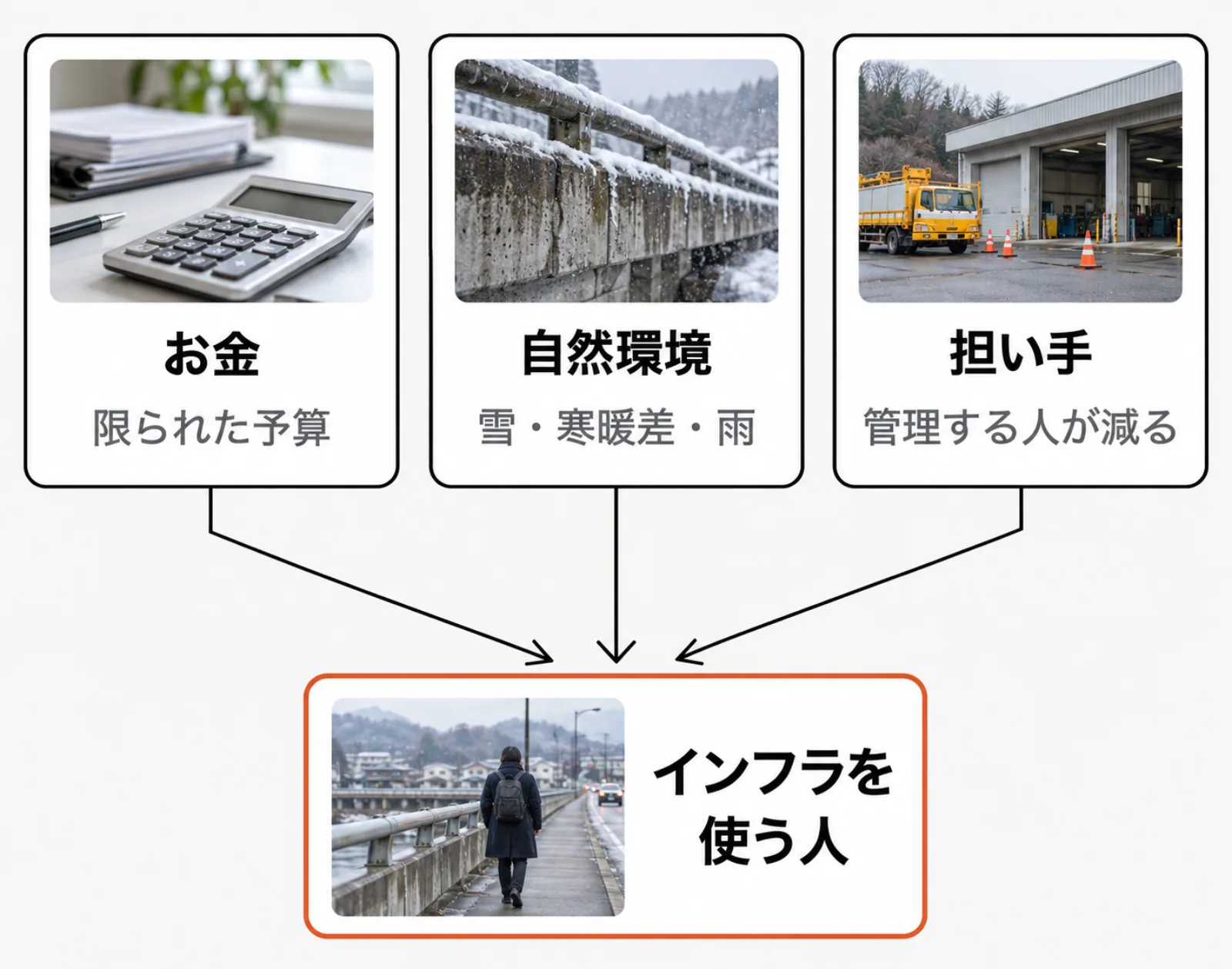
Three pressures on infrastructure
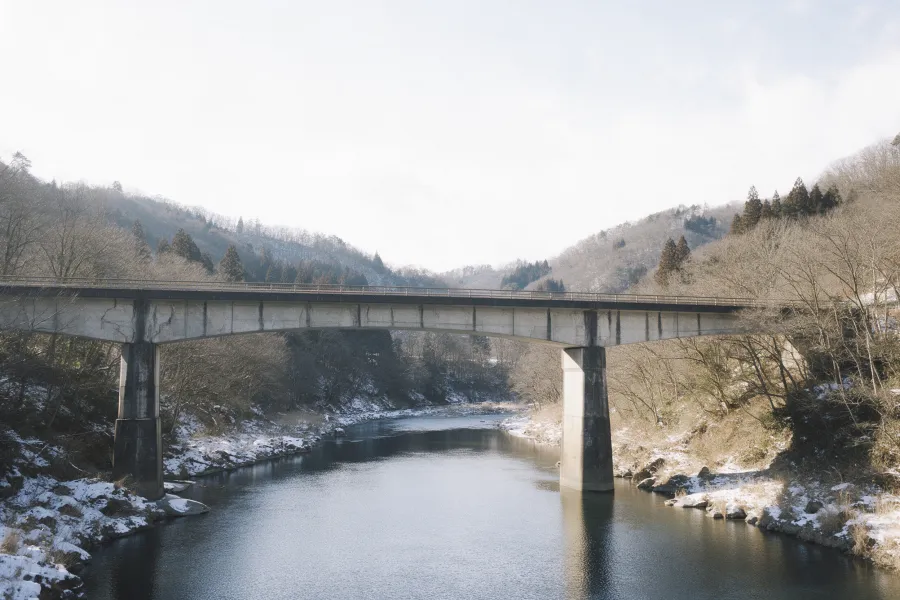
Japan's roads, bridges and other civil structures are getting old. Because so many people use them, the law requires them to be inspected once every five years.
But the conditions that support that work get harder every year. Spending like in the high-growth era is no longer possible, and as the population shrinks, it becomes even harder to fund places that few people use. Facilities run on tolls feel this most.
On top of that, every structure deteriorates over time. Snow, sharp swings in temperature and heavy rain speed that up. And as fewer people use a place, fewer people are left to look after it.
Money, nature and people. When the three overlap, the ones most at risk are the people who use the infrastructure.
Inspection and maintenance still have room to improve
That is why efficiency has to start at the management stage. Civil engineering still has more room to change than most industries. Construction has begun to see real efficiency gains, but inspection and day-to-day maintenance are only getting started.
The smaller the site, the more it relies on manual work. Tools that help there would bring us closer to a society that can keep using its infrastructure, with care, for a long time.
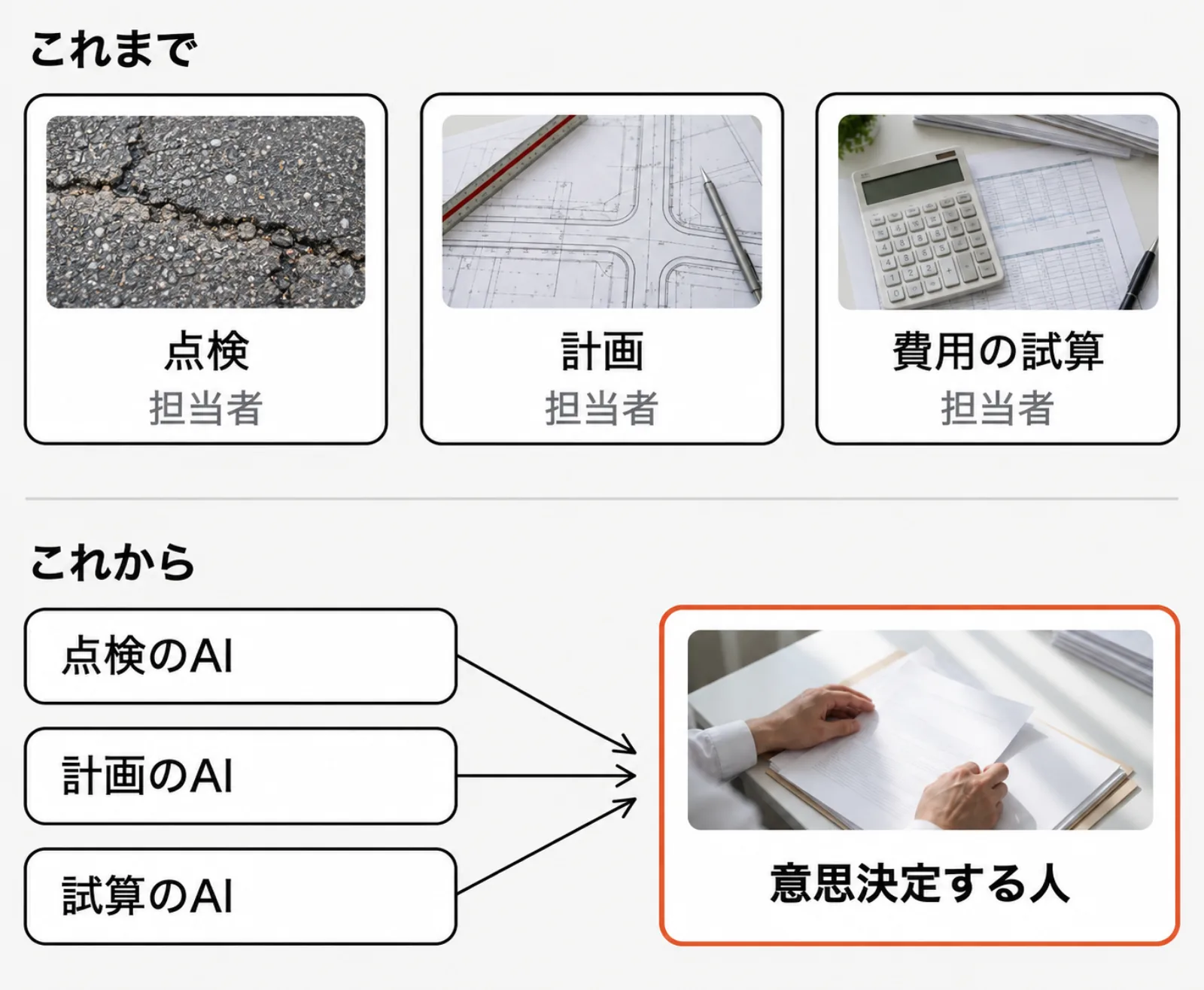
AI that lets one decision-maker run the work
That society cannot be sustained by people alone. AI that finds damage in images during inspection, AI that drafts plans, AI that estimates costs. Work that used to be split across many people could be run by a single person who makes the decisions. That is the kind of system I believe we will need.
Cheap, broad, and open to everyone
The first services address inspection. I don't think they need to be paid.
AI tends to get more accurate as models get larger, but large models are out of reach for managers with limited resources. Getting tools to as many people as possible, as cheaply as possible, is what is good for society. So the models are published for free, and anyone who wants to build a system with them gets my full support.
People talk about AI in many ways, but for managing infrastructure I believe the gains outweigh the costs. Infra Intelligence aims to be the catalyst that puts tools able to use that power into the hands of the people who manage it.